
Work / Smart Temperature Probe
Smart Temperature Probe
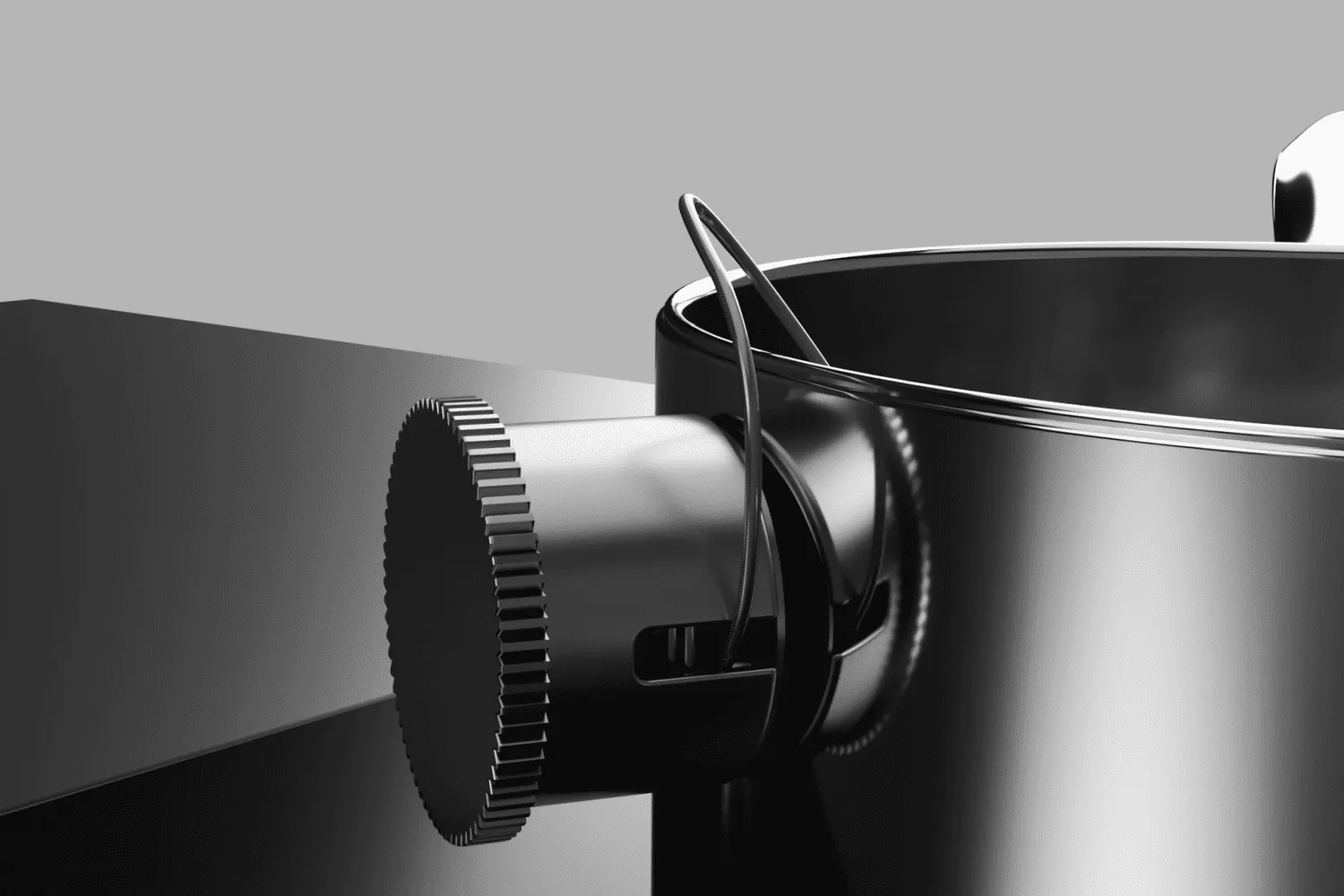
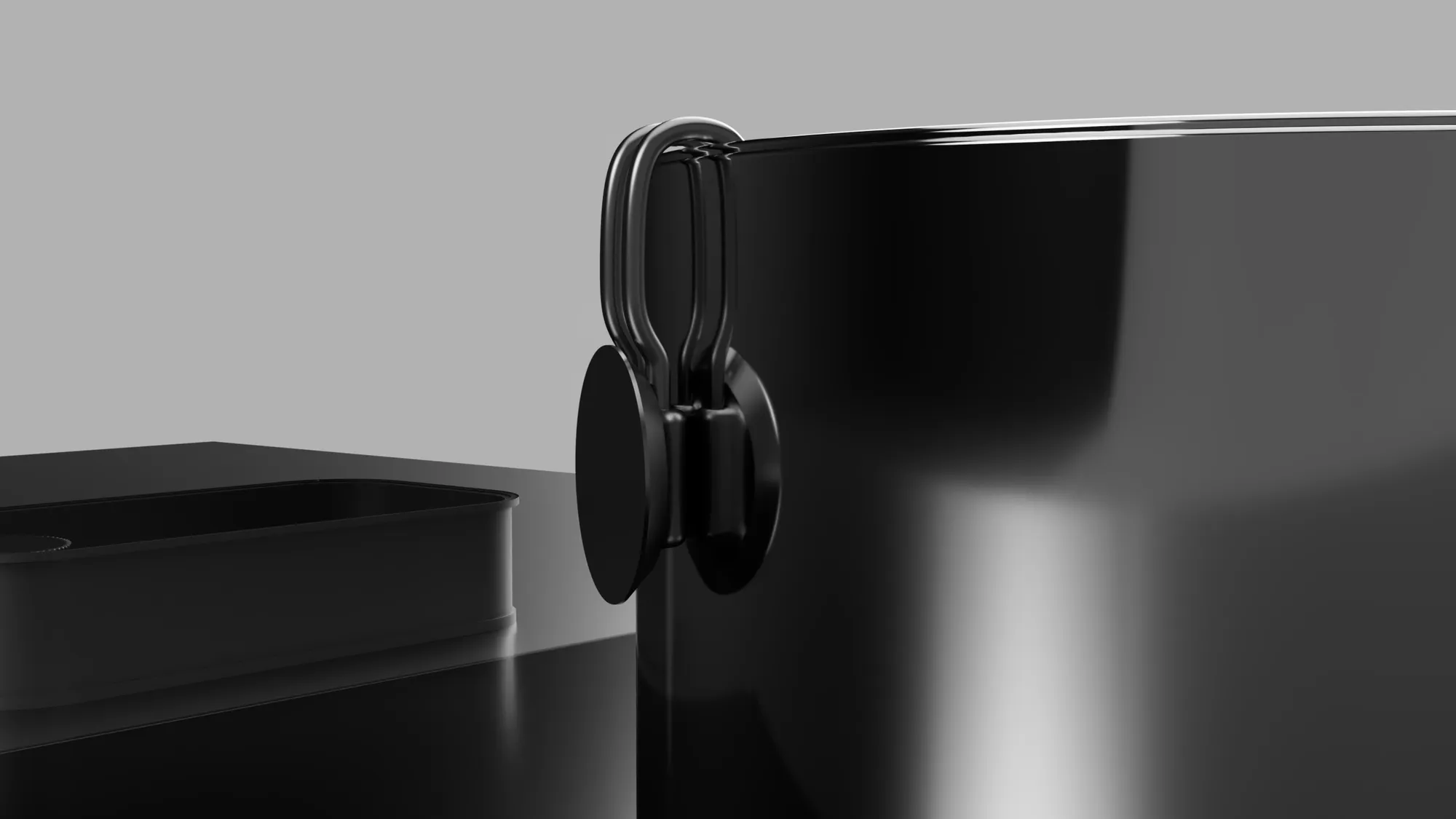
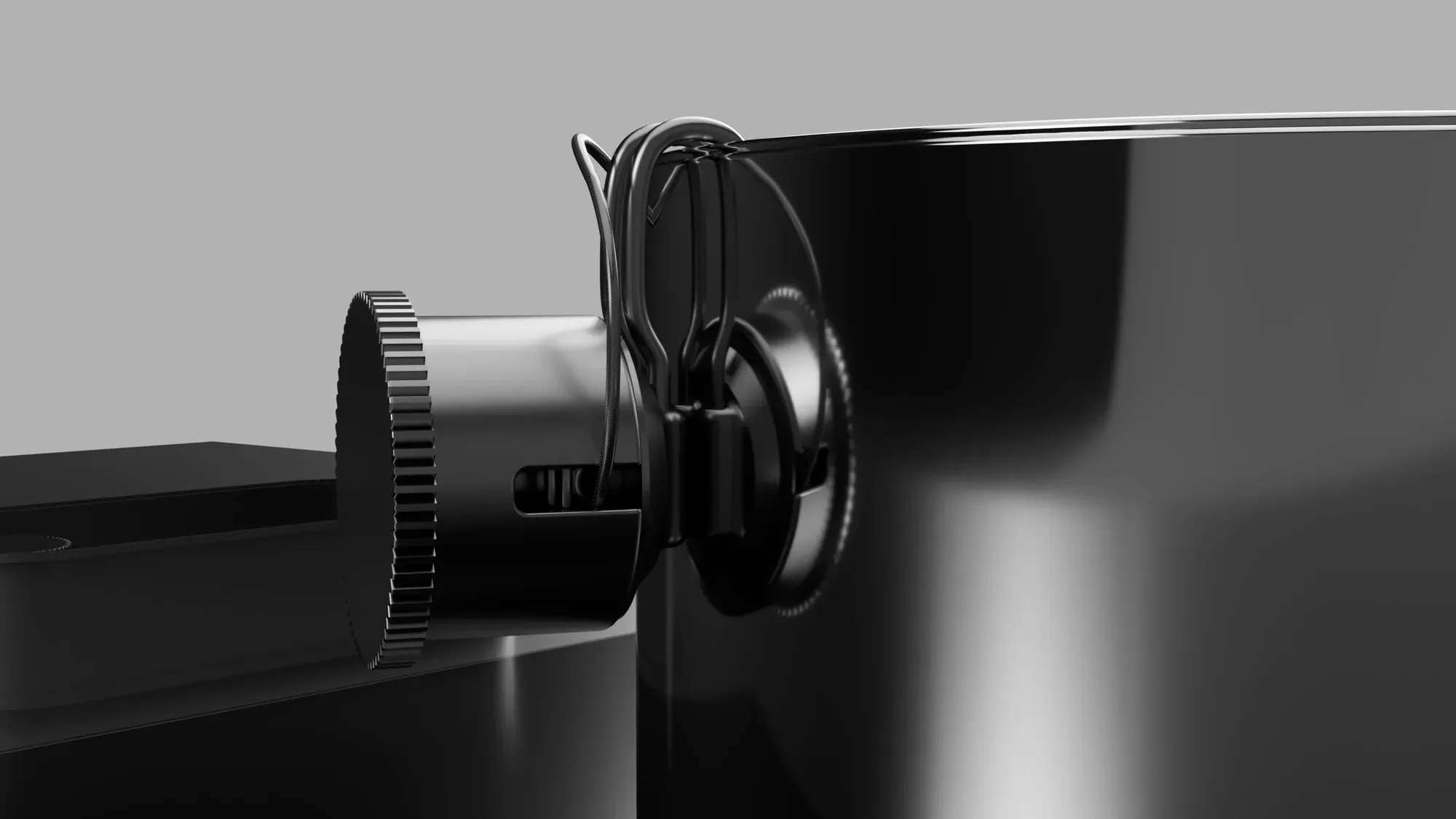
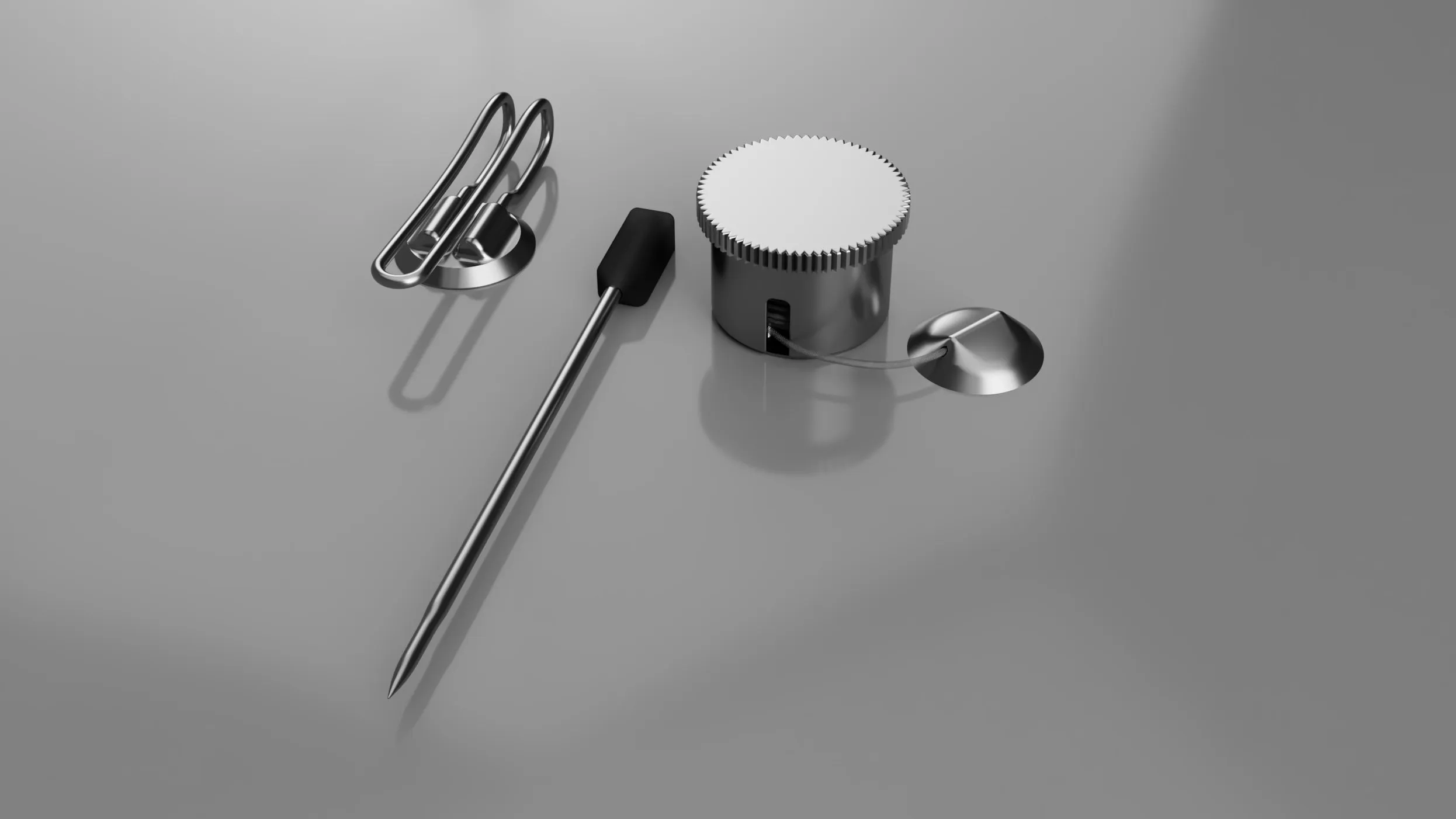
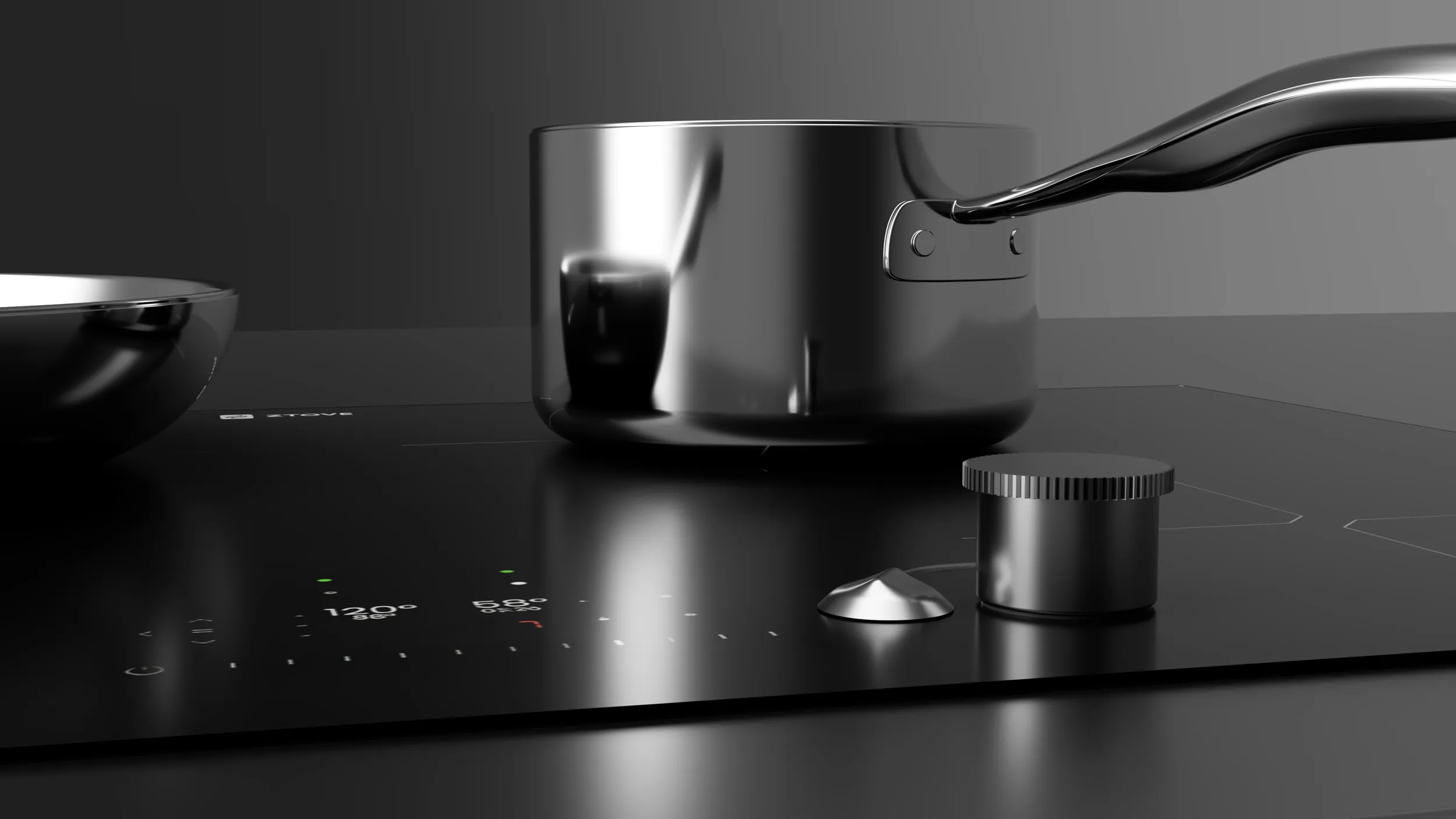
A slim, magnetic temperature sensor that snaps onto the bottom of any pot or pan — bringing Ztove's precise, automated cooking to the cookware people already own.

Problem
Ztove's induction cooktops can hold a pan at an exact temperature — but only with Ztove's proprietary cookware. The smartest features were locked away from the pots and pans people already own and love.
Approach
A research-through-design master's thesis with Ztove: fieldwork in real kitchens, working prototypes built with thermocouples and 3D-printed housings, and repeated cooking tests with home cooks.
Outcome
A slim magnetic probe that snaps onto any pot or pan, unlocking precise automated cooking for existing cookware — tested with home cooks and developed into a detailed CAD concept in collaboration with Ztove.
Challenge
make any pan a smart pan
Ztove’s cooktops can hold a pan at an exact temperature automatically — but only with Ztove’s own cookware. For everyone else, the smartest features stay out of reach.
My master’s thesis asked one question: what if any pan could become a smart pan? The harder, hidden question was how to add technology to cooking without breaking the craft people already love.
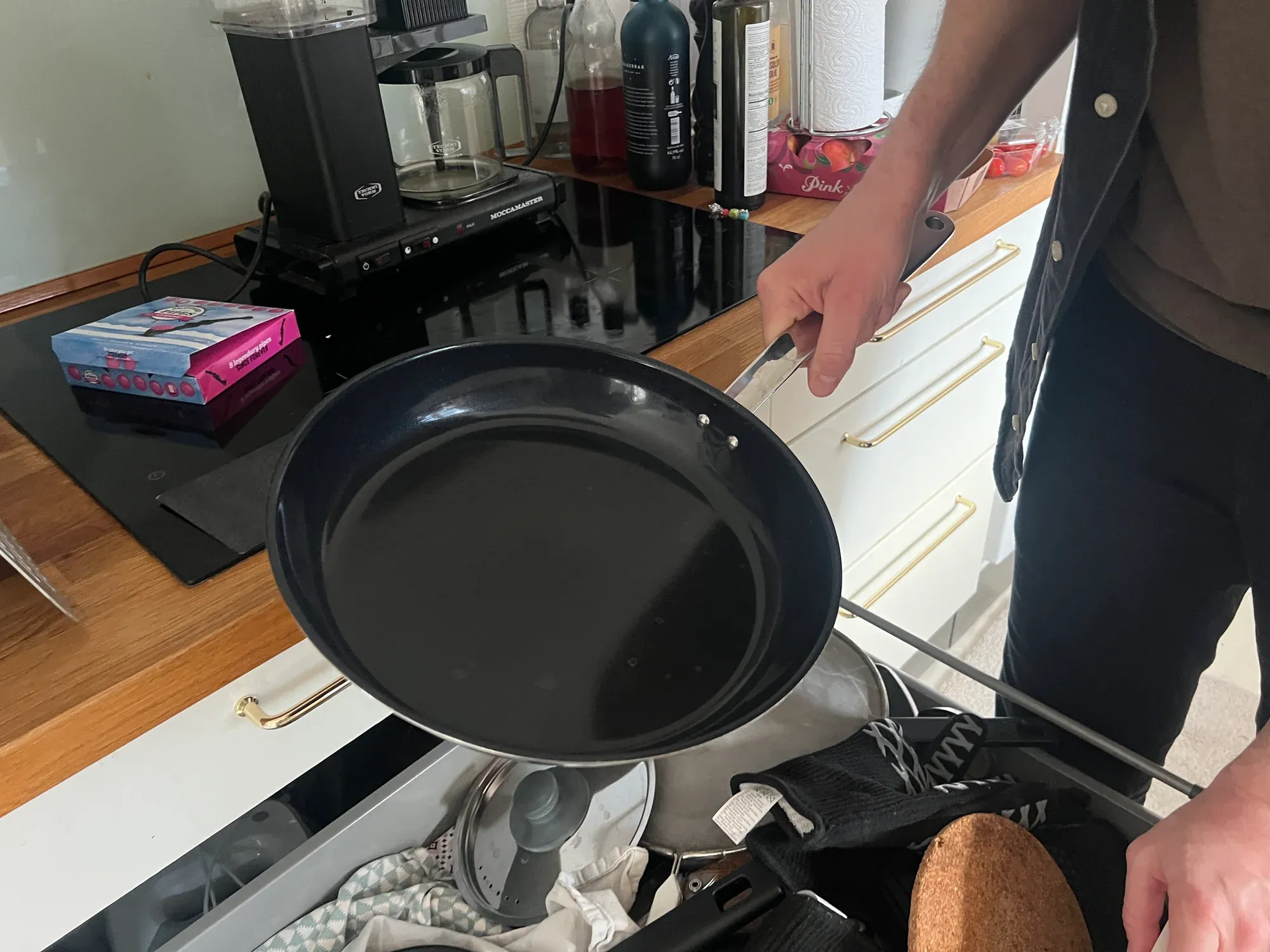
Fieldwork started with the cookware people refuse to give up.
Research
in real kitchens, senses beat screens
I observed home cooks in their own kitchens and talked through their routines. Two findings shaped everything that followed:
- Cooks trust their senses — smell, sound, touch — far more than displays or apps.
- A smart device only earns its place if it demands no extra attention and no extra space.
That set the design constraint: no screen, no app-first flow. The sensor had to disappear into the tools cooks already use.
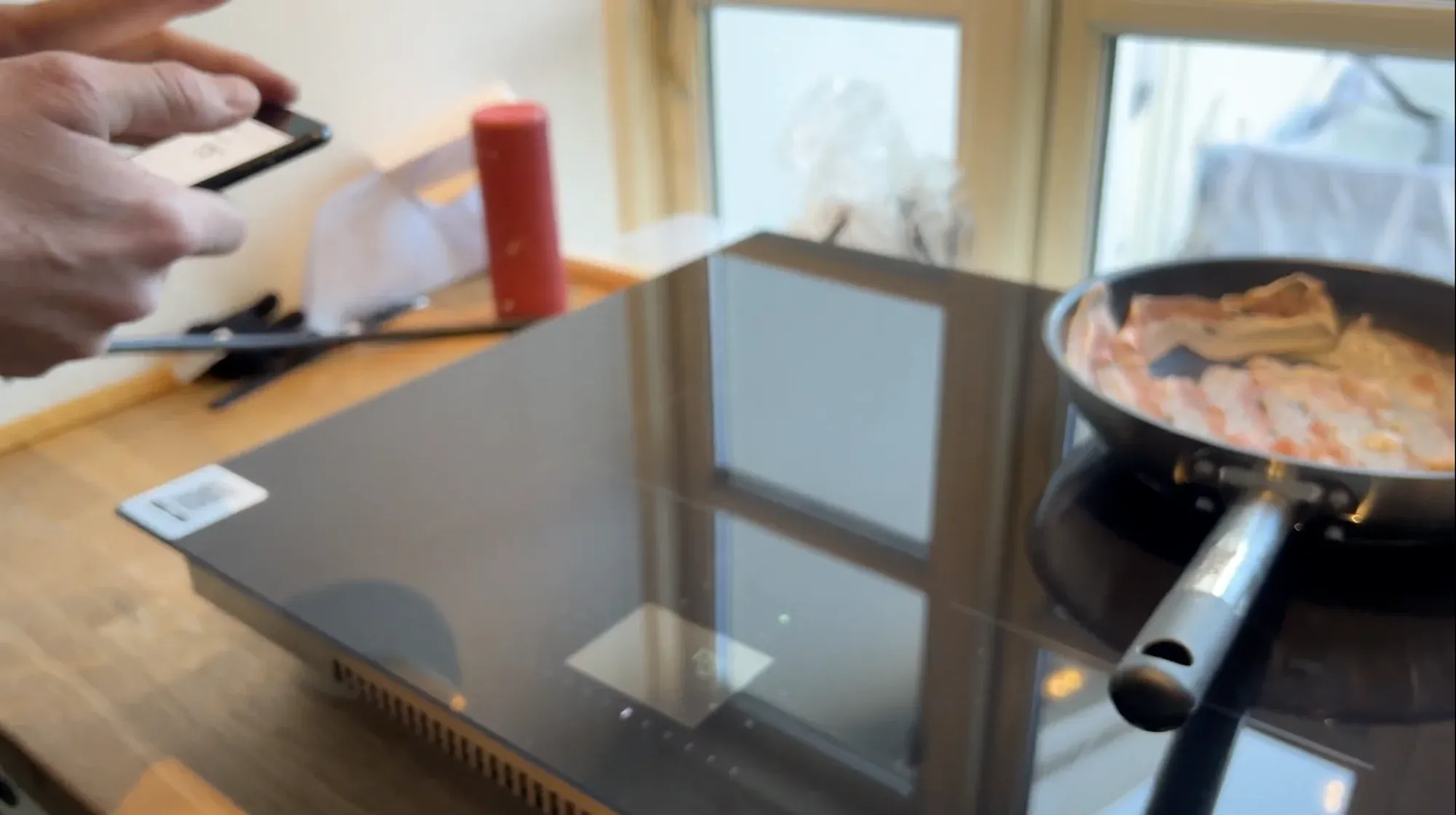
Observation sessions in participants’ kitchens grounded every later decision.
Prototyping
a sensor that disappears
The constraint pointed to a magnetic temperature probe that attaches to the bottom of any pot or pan. I built several working versions — varying shape, size, and attachment mechanism — using thermocouples, 3D-printed housings, and a lot of real cooking.
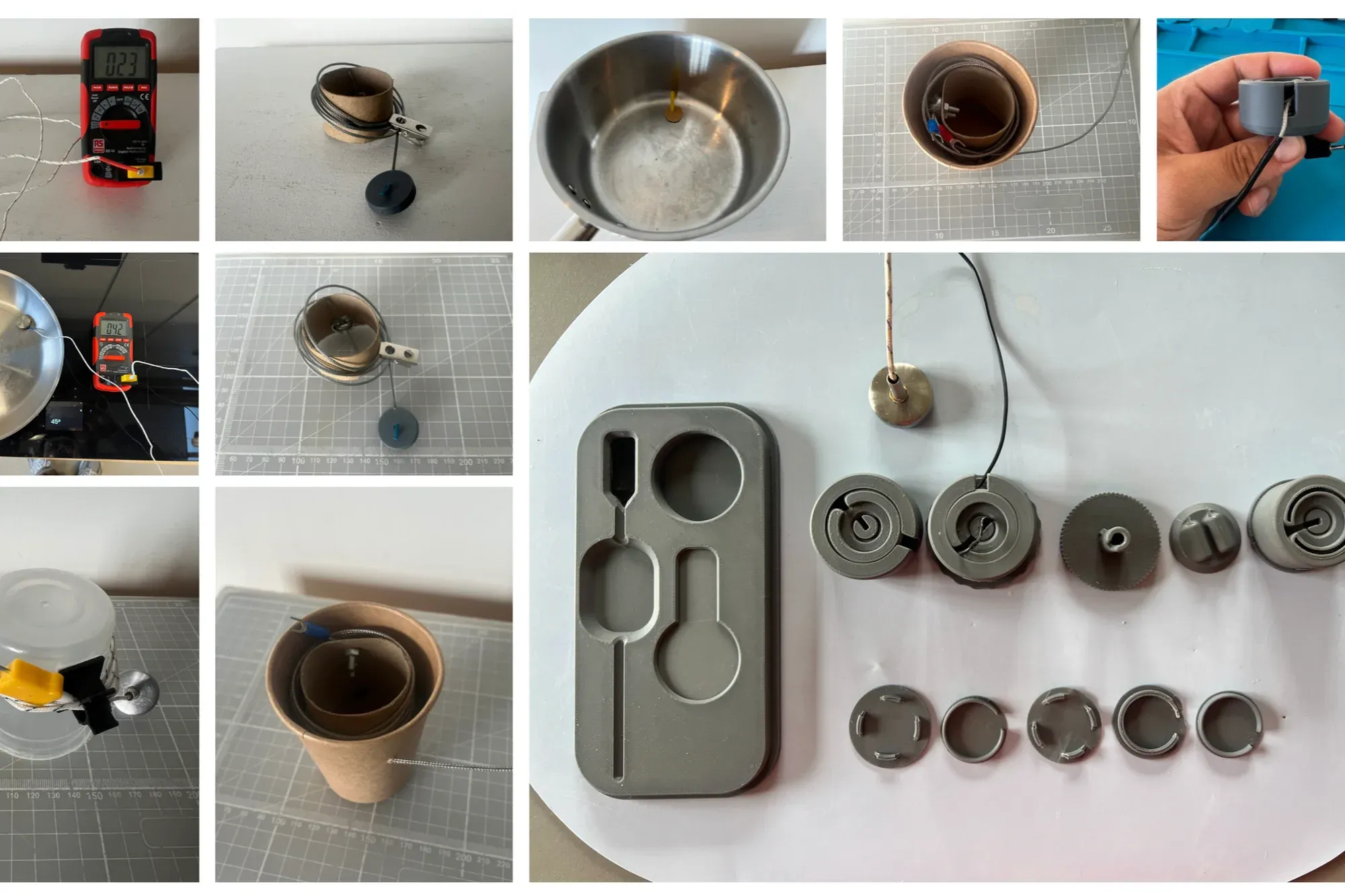
Iterations moved from bare thermocouple rigs to printed housings with embedded magnets.
Each round of cooking with a prototype fed directly into the next: the probe got slimmer, the magnet stronger, the attachment one-handed.
Testing
home cooks forgot it was there
I put the prototypes in the hands of home cooks and let them do what they always do. The feedback was consistent:
The best compliment the probe received was being ignored — it never got in the way of stirring, flipping, or moving pans.
- Quiet by default — participants wanted it working in the background, only signalling when something needed attention, like a sauce reaching temperature.
- Instantly understood — snap it on, cook as usual. No manual needed.
These sessions confirmed the concept and defined the final form factor to resolve in CAD.
CAD model
resolving the details
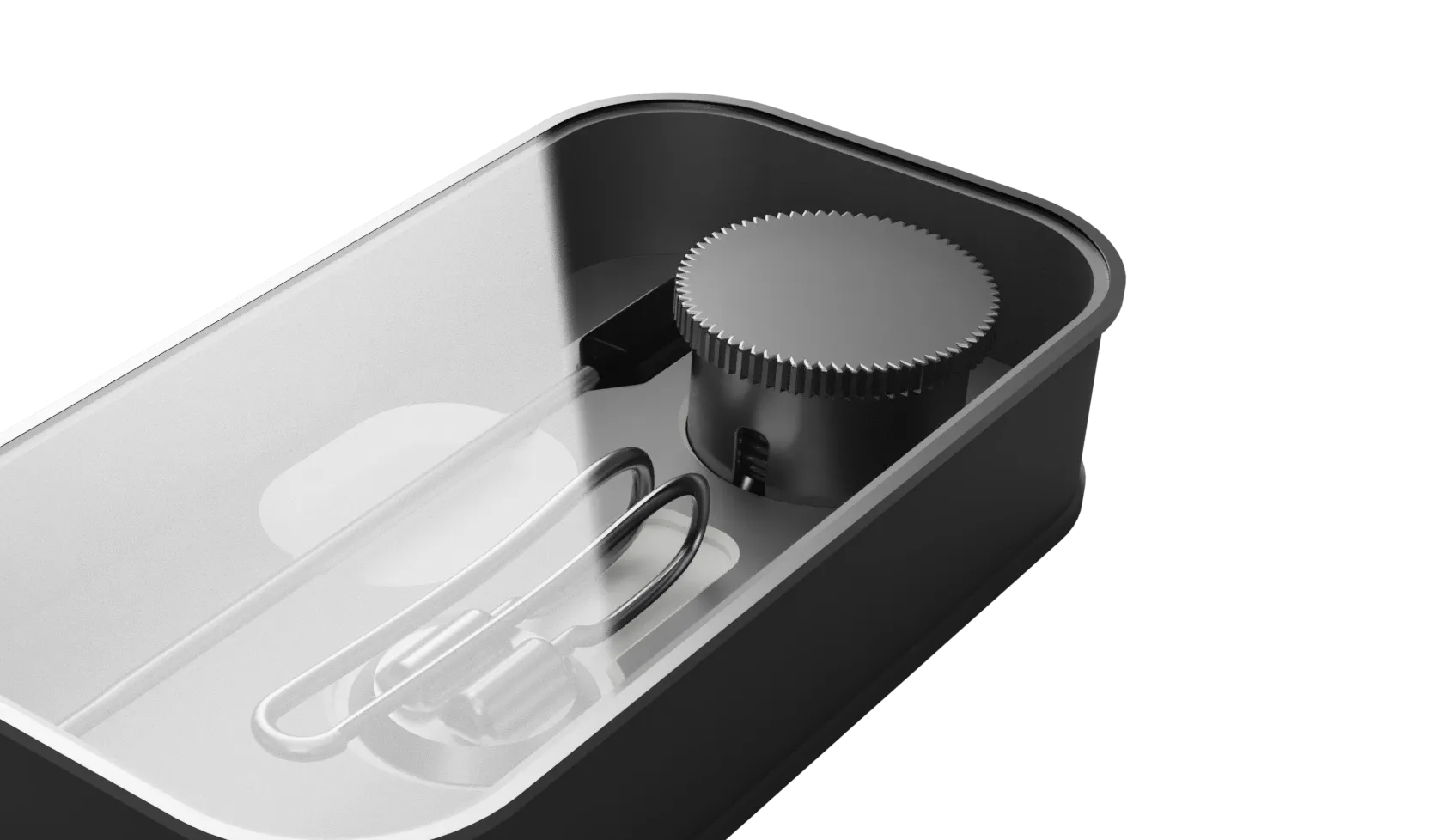
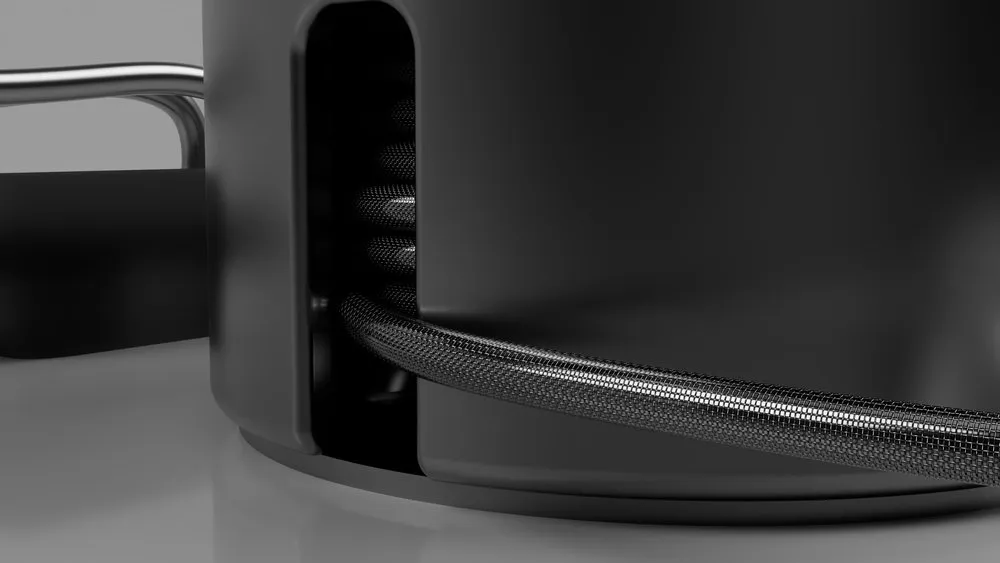
I modelled the probe and its charging tray in full detail — internals, tolerances, materials, and how the pair would look and feel on a kitchen counter. The model became the key tool for communicating the concept to Ztove and to test participants.
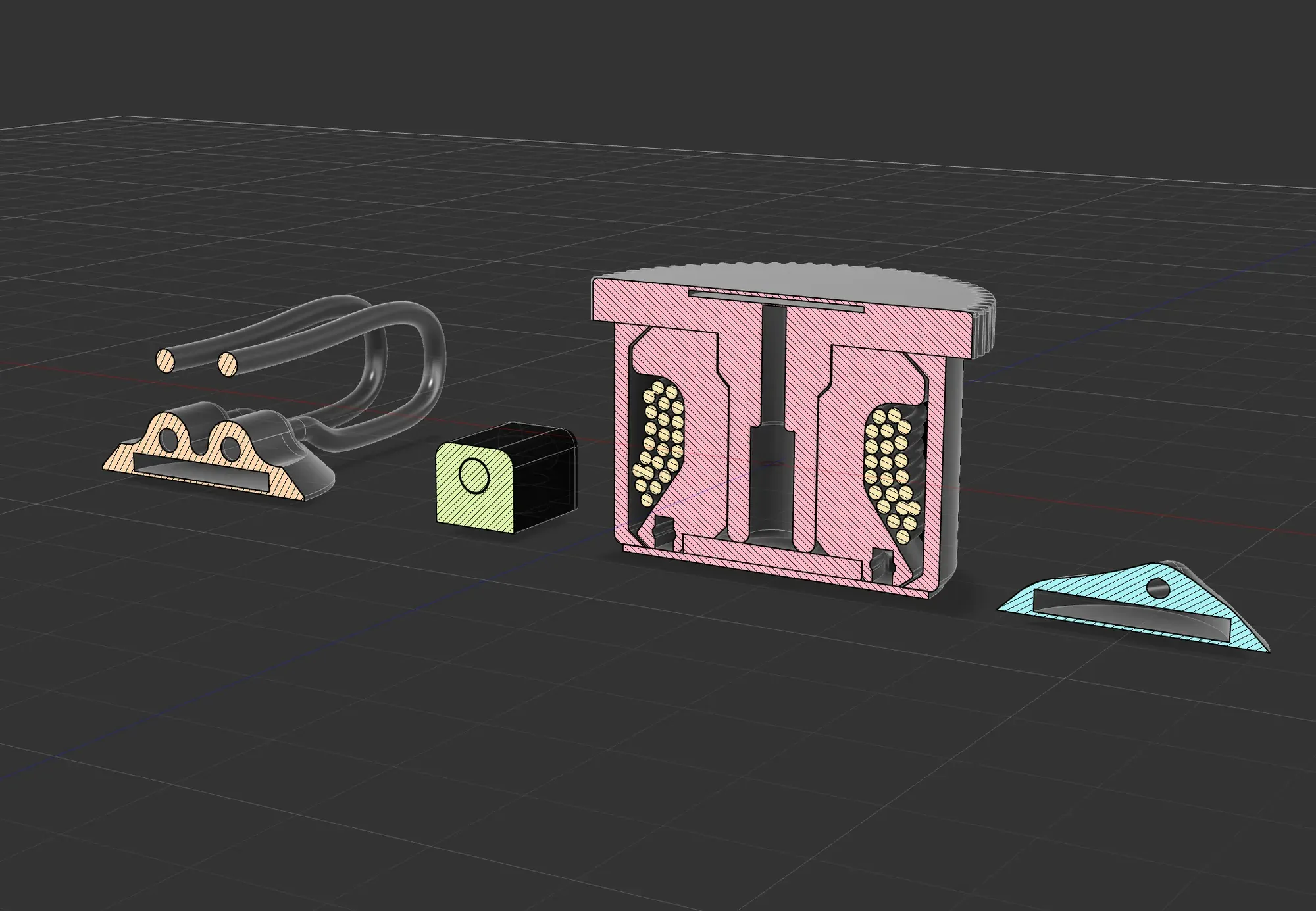
The cross-section resolved sensor placement, magnet seating, and sealing.
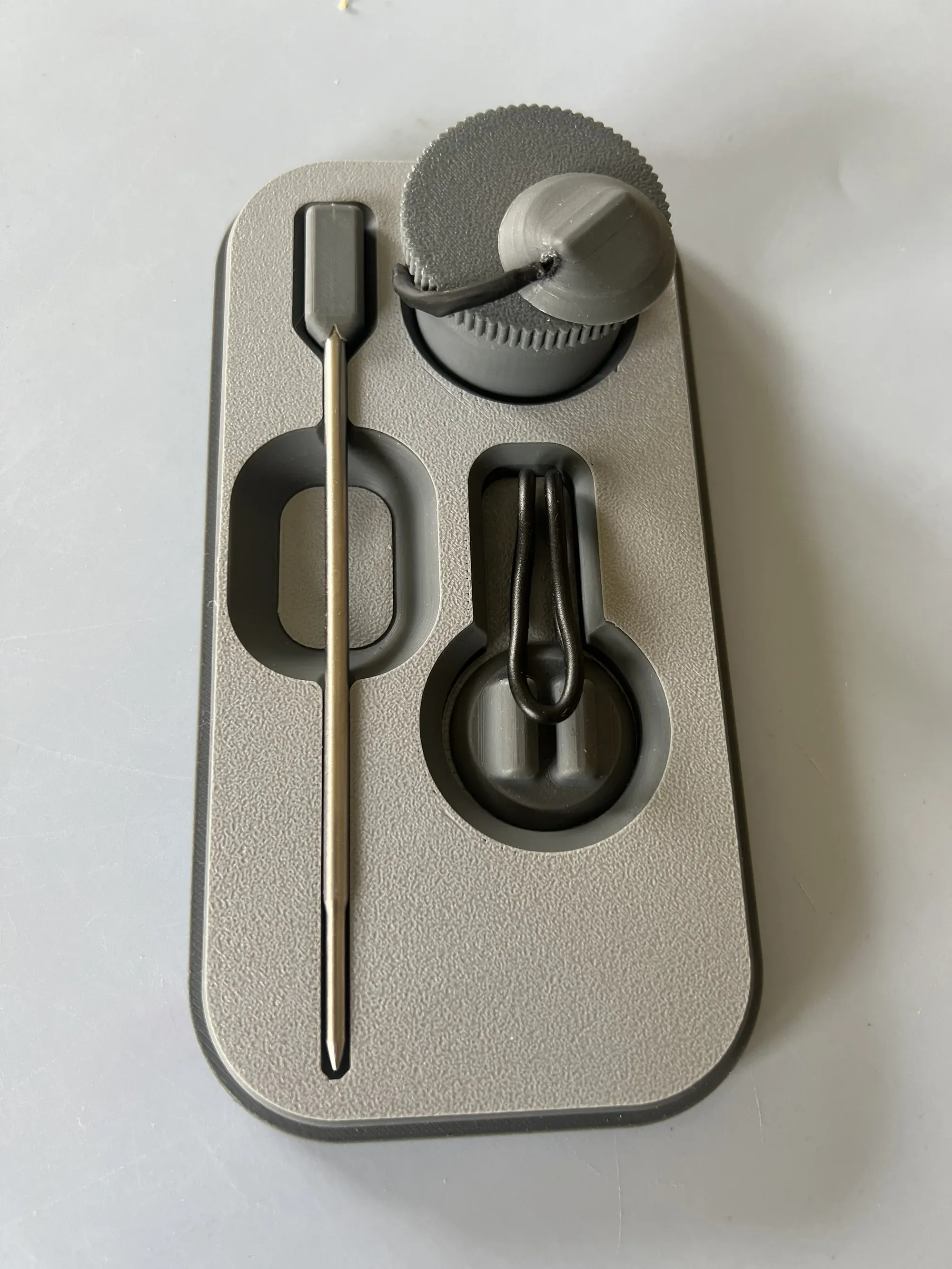
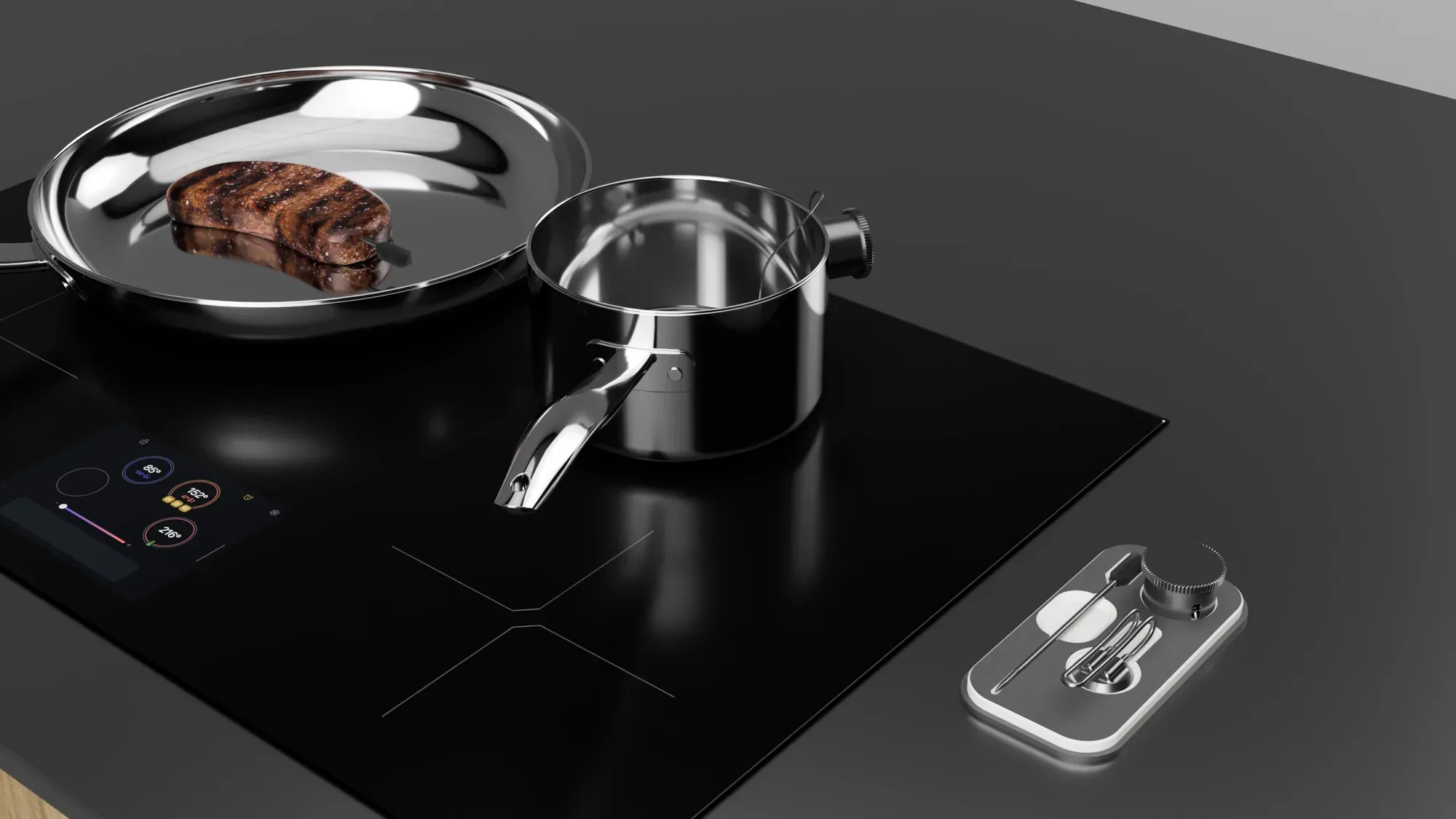
The charging tray gives the probe a home on the counter — and a reason to be found again.
Outcome & reflection
The result is a concept that unlocks Ztove’s precise temperature control for any cookware — no special pots needed. Developed into a detailed CAD concept and tested with home cooks, it points toward a family of smart kitchen tools that support natural cooking behavior.
What the project taught me: the strongest smart products are the ones that ask for the least. Designing for embodied, sensory practice meant measuring success by how little the technology interrupted — a lens I now bring to every product I work on. Next step: deeper integration with Ztove’s system, and testing the probe over weeks of everyday cooking rather than single sessions.