
Work / Hospital Bed Remote
Smart Temperature Probe
Redesigning LINAK's hospital bed remote so senior citizens can adjust their own beds — bigger tactility, clearer layout, fewer functions, more agency.
Problem
Hospital bed remotes are designed for caregivers, not residents. Arthritis, low vision, and unfamiliar technology keep senior citizens from adjusting their own beds — while care homes face a future with fewer hands to help.
Approach
A three-week sprint with LINAK: desk research on impairments, fieldwork in two care homes, wide sketching, hands-on physical prototypes, and stress-testing under simulated impairments — ski gloves on, eyes closed.
Outcome
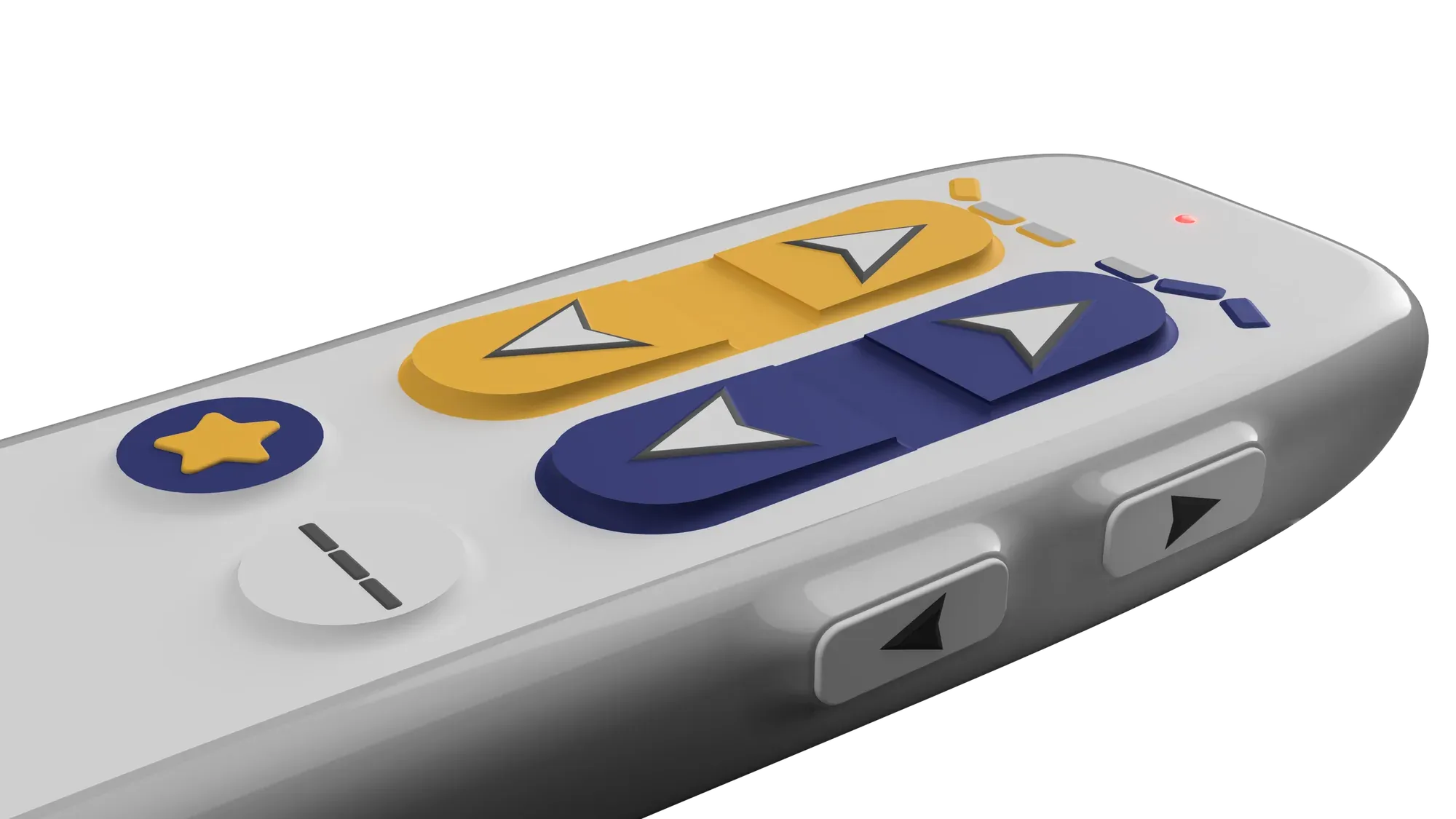
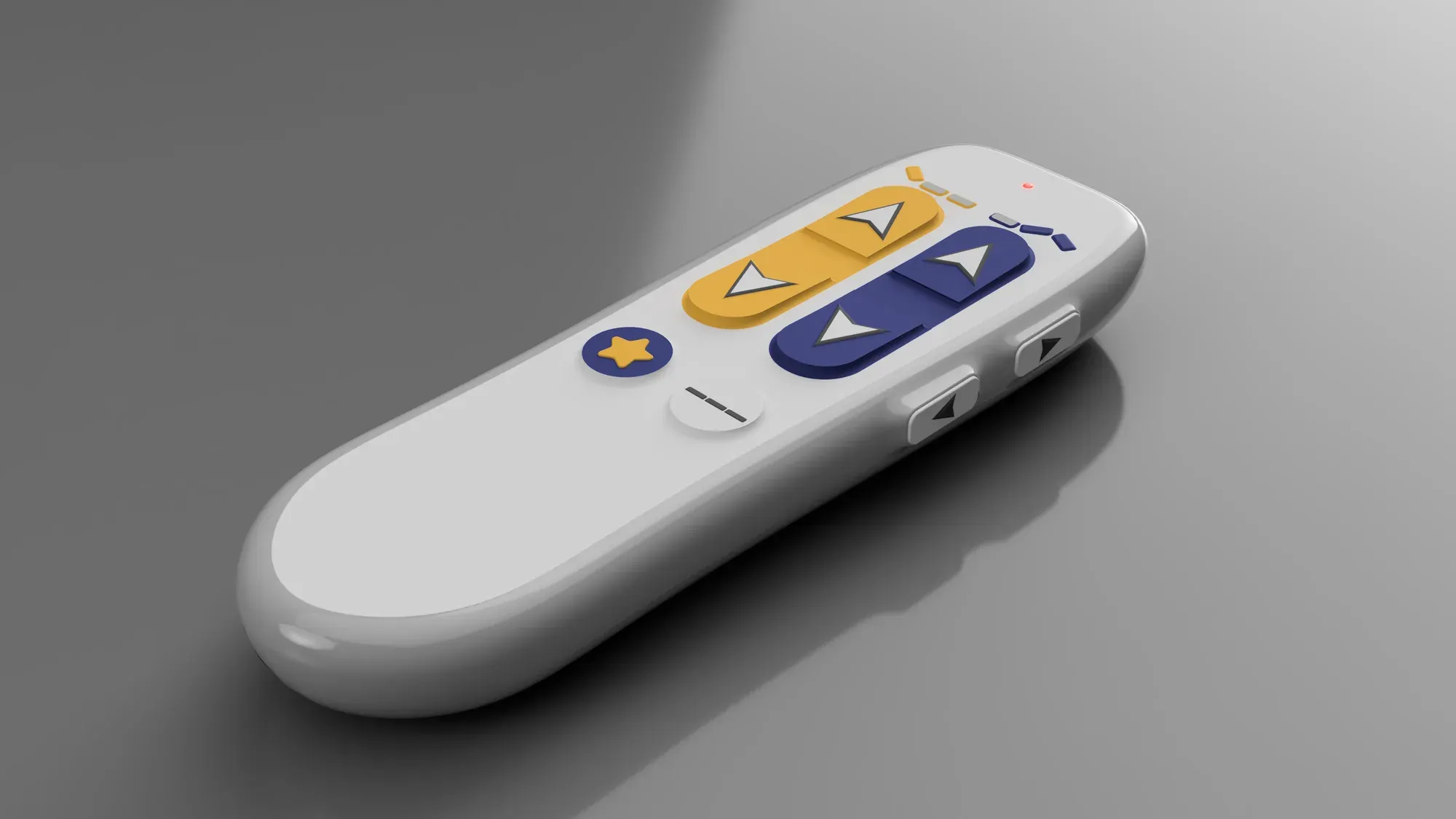
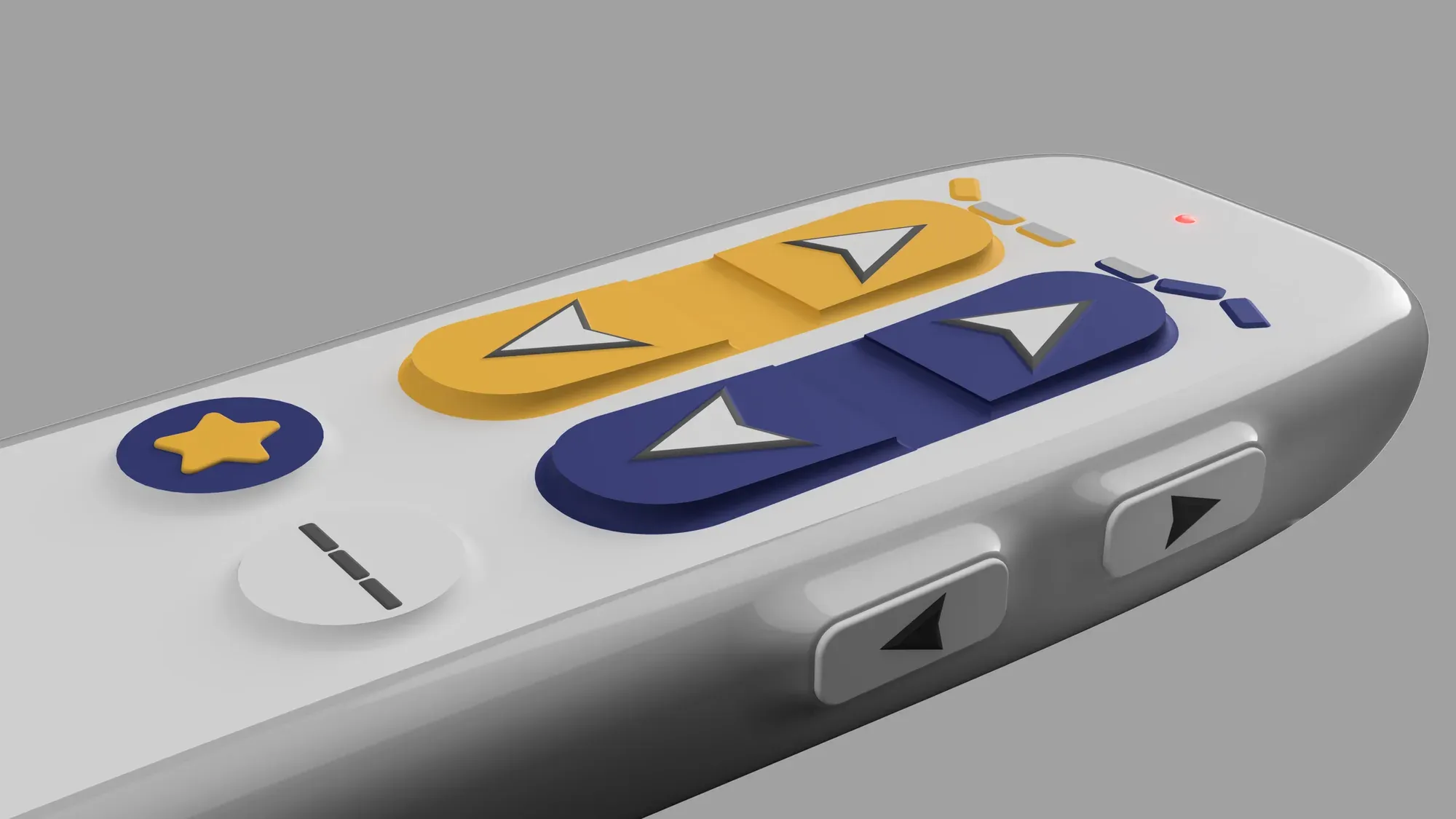
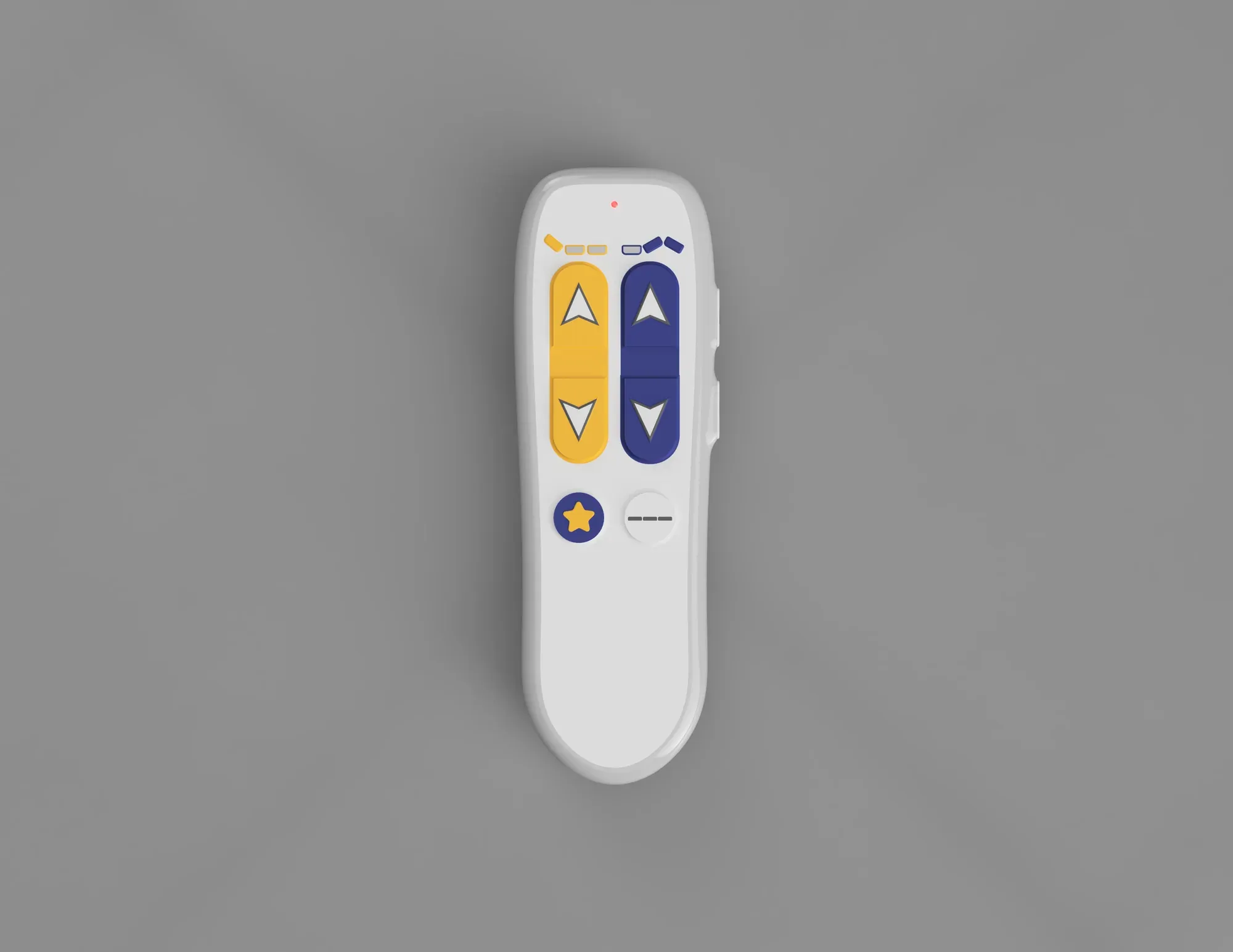
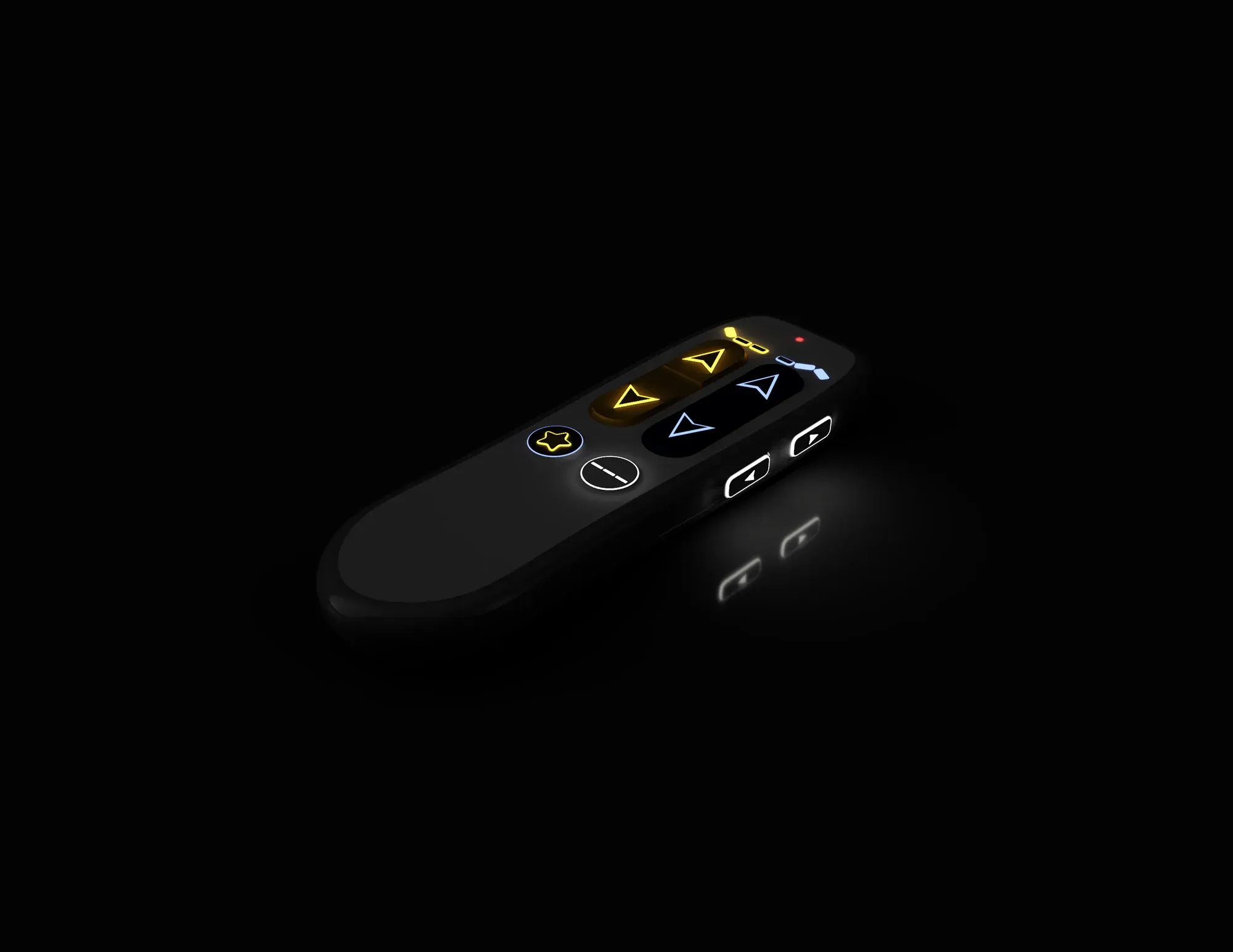
A remote seniors can find, hold, and operate on their own: large high-contrast rocker buttons, a grippable waist, and only the functions residents actually need — delivered as a 3D-printed, testable model.
Challenge
give residents back the controls
Care homes face a growing population of senior citizens — and fewer hands to care for them. LINAK, the company behind the actuators in countless hospital beds, asked a three-week master’s team: how do we redesign the bed remote so citizens can operate it themselves?
Today the remotes are used almost exclusively by caregivers. Giving citizens back that control means designing for arthritis, low vision, and unfamiliarity with technology — all at once.
Desk research
mapping grip, sight, and memory barriers
We started by mapping the impairments that stand between senior citizens and the current remote — grip strength, dexterity, eyesight, cognition — and surveyed existing remotes, accessibility controllers, and assistive devices for what already works.
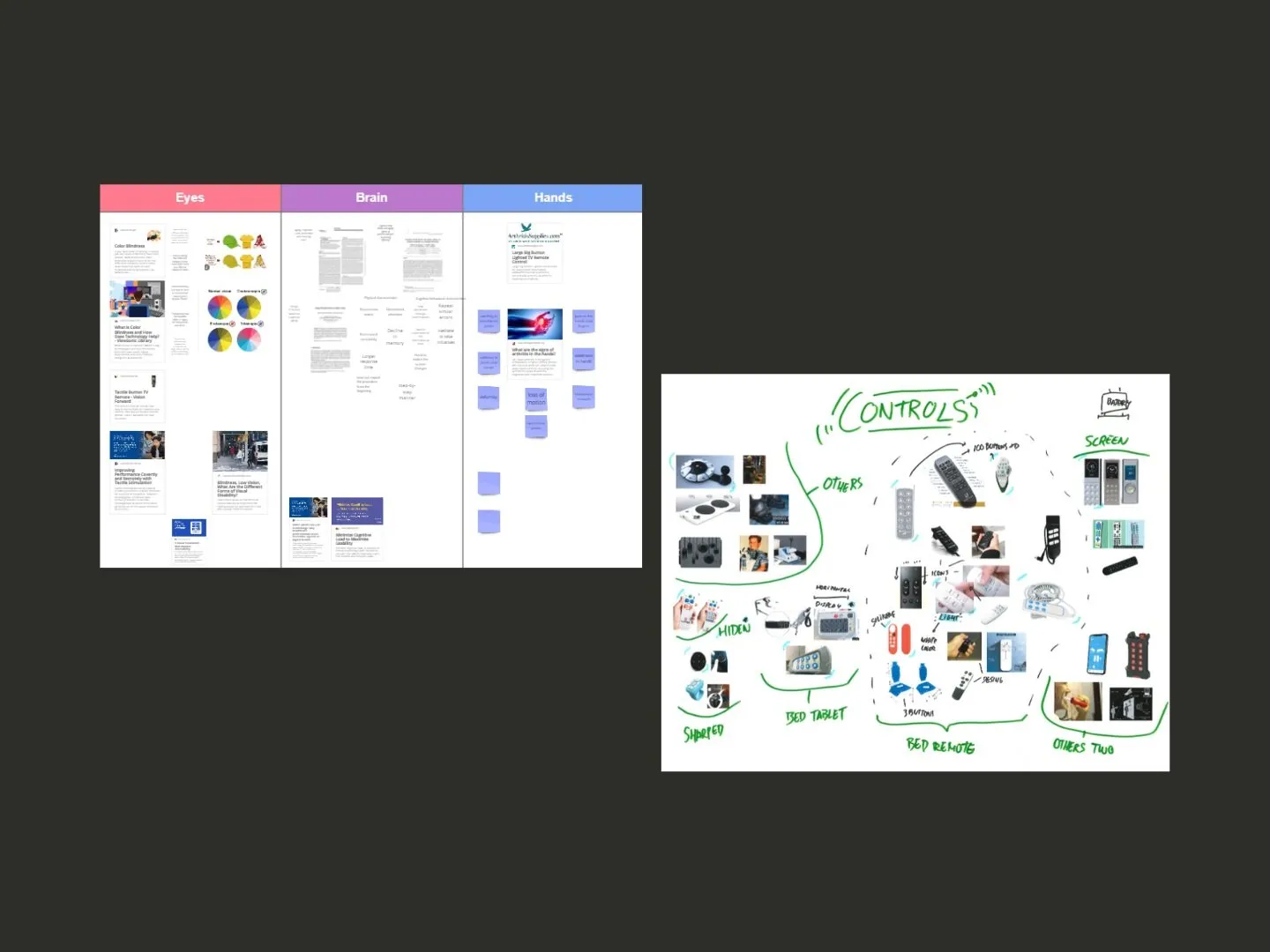
The impairment map became our checklist: every design decision had to pass all four barriers.
Fieldwork
in care homes, simplicity wins
We visited two care homes and interviewed caregivers — and, on one visit, two citizens — to see how remotes are actually used in context. The barriers were consistent:
- Low tactility — buttons hard to feel and distinguish
- Confusing layout with too many functions
- Too big or too wide for smaller hands
- Low contrast — hard to read, impossible to find in the dark
One telling insight: recliner-chair remotes with a simple up/down layout were used by citizens. Simplicity works — and it set the bar for every concept that followed.
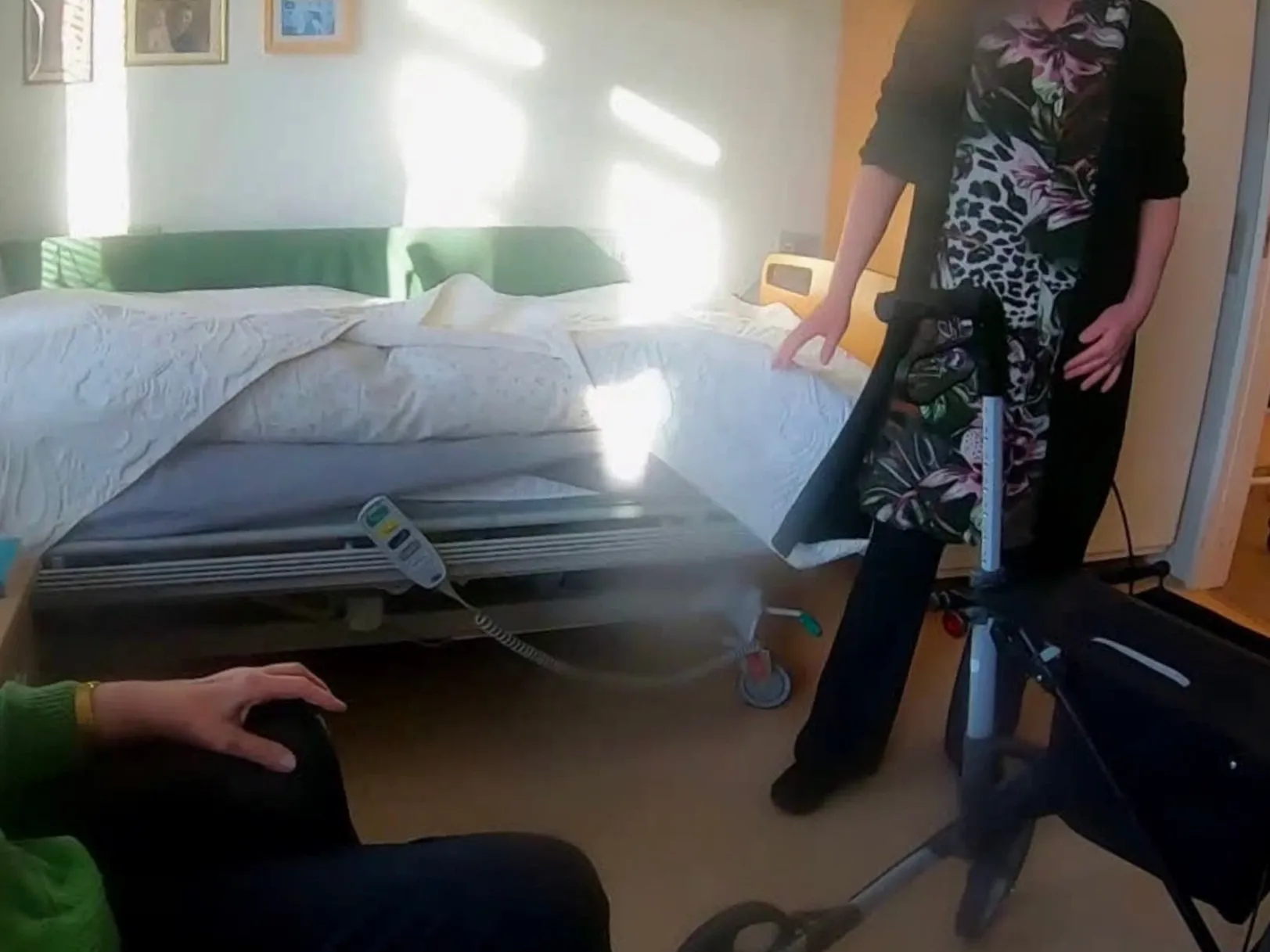
Field notes from the care home visits — the recliner remote observation changed the project’s direction.
Sketching
wide before narrowing
With the field insights as constraints, we sketched broadly — shapes, layouts, functions, materials, and button types that could make the remote self-explanatory at first touch.
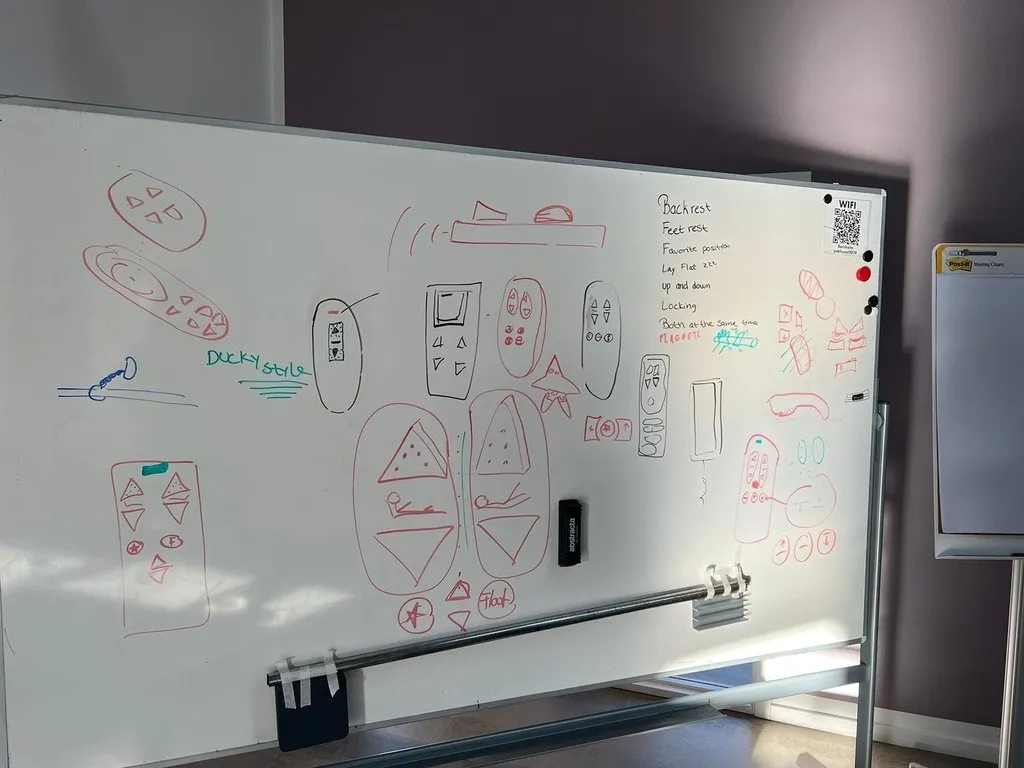
From broad shape studies to detailed button and grip explorations.
Prototyping
objects you can hold beat renders
We turned the strongest sketches into physical prototypes and experimented hands-on with shapes, sizes, button types, and layouts — cheap, fast, and tangible. Holding the options made the trade-offs obvious in a way screens never could.
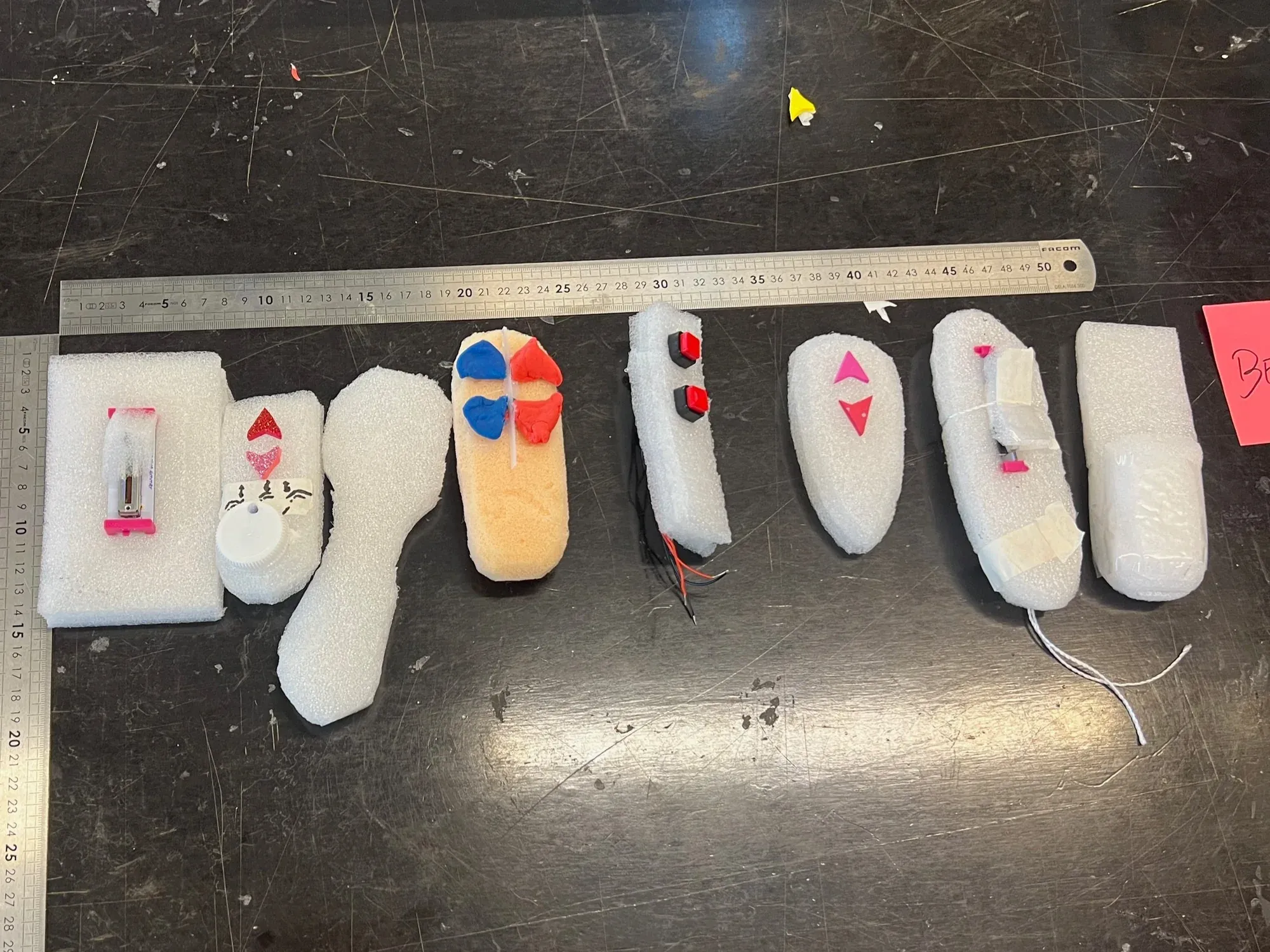
Foam and cardboard made every idea testable within hours.
Testing
ski gloves and closed eyes
We ran a workshop where design students pushed the prototypes to their limits under simulated impairments:
- Ski gloves to simulate arthritis and reduced dexterity
- Eyes closed to simulate visual impairment, navigating by touch alone
- Think-aloud walkthroughs of every function
We also consulted an expert on introducing technology into healthcare systems to pressure-test the concept against real-world constraints. The surviving design choices — rocker buttons, narrow waist, radical simplicity — went straight into CAD.
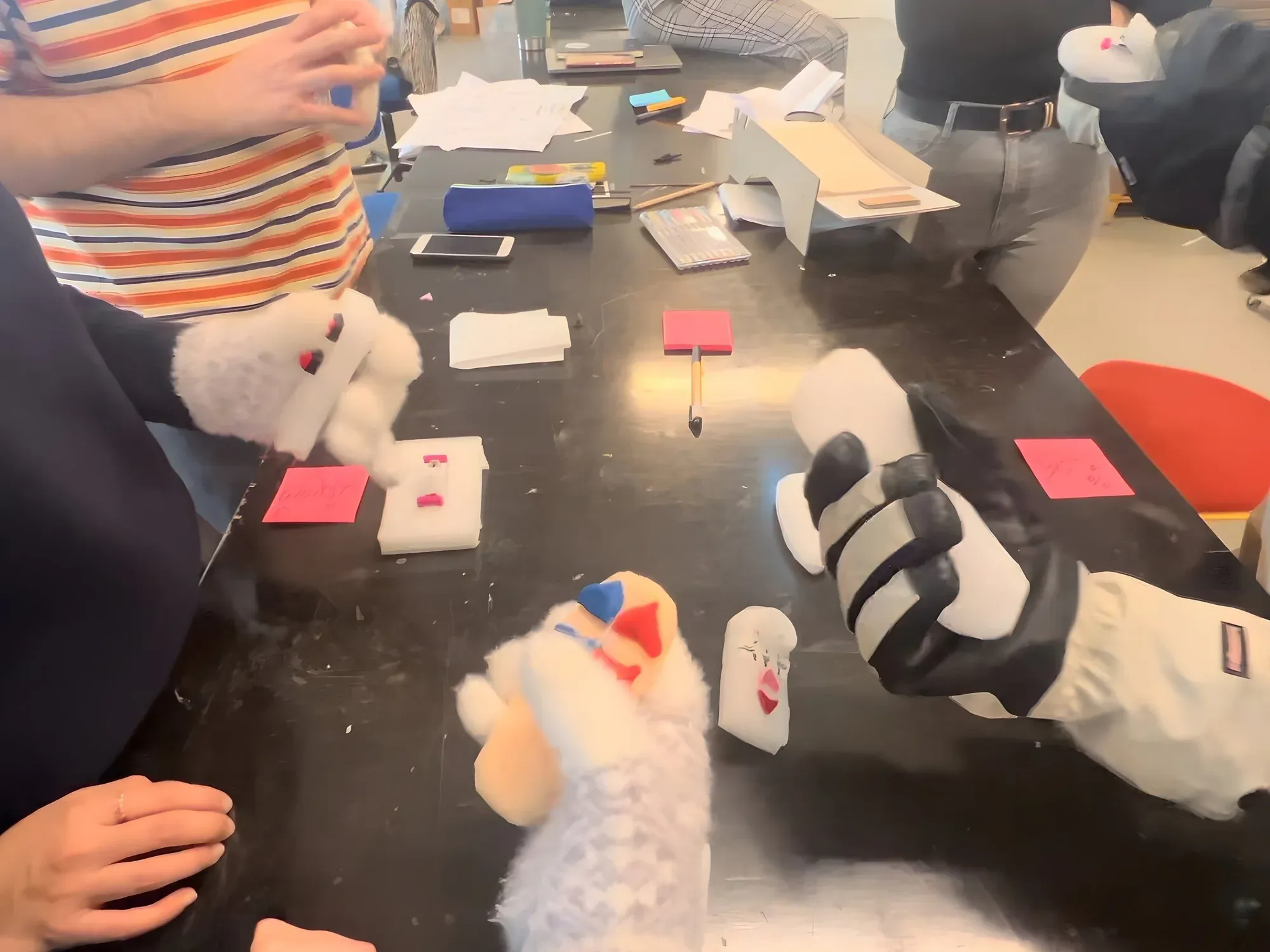
If you can operate it in ski gloves with your eyes closed, arthritis and low vision won’t stop you.
CAD & print
into someone's hand
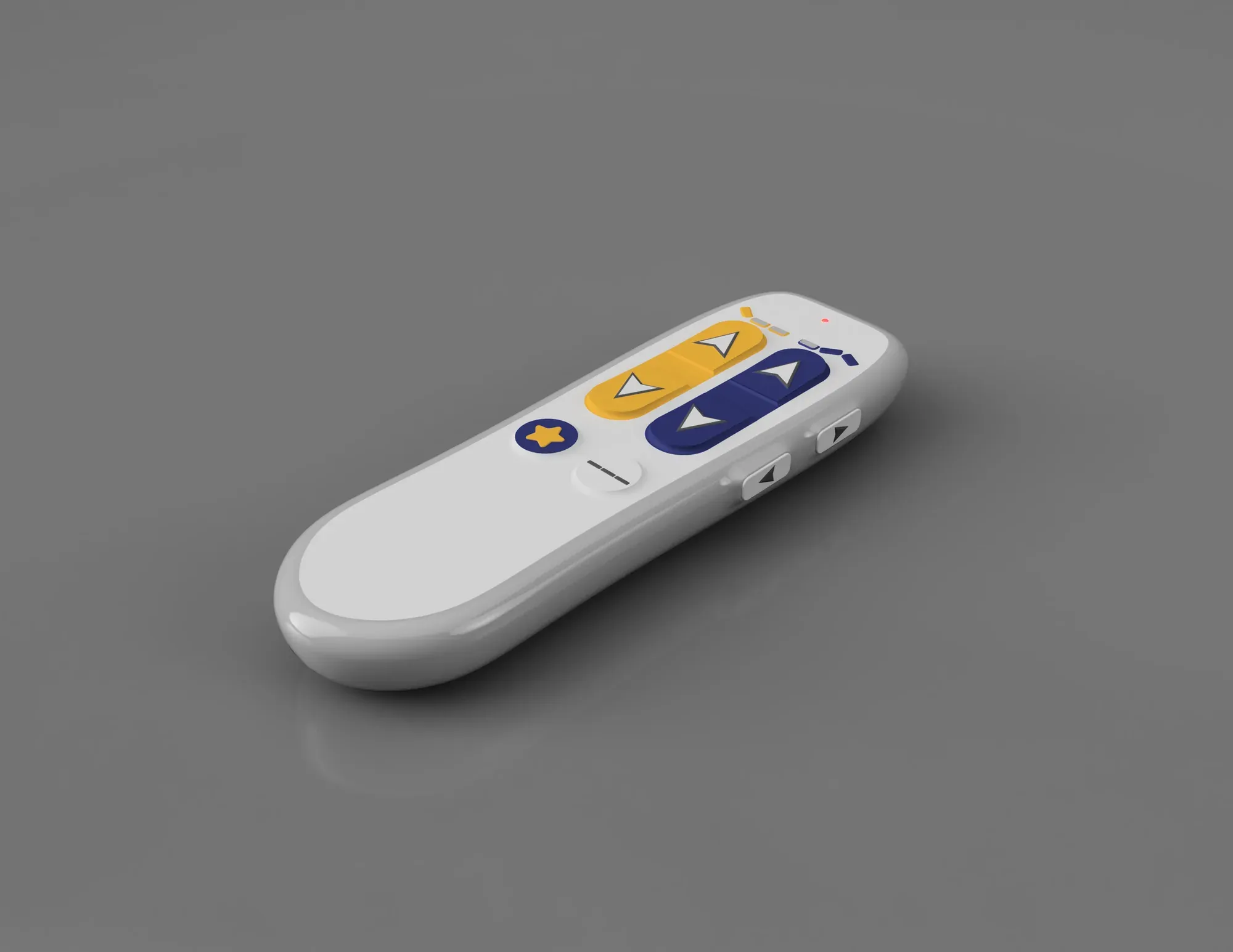
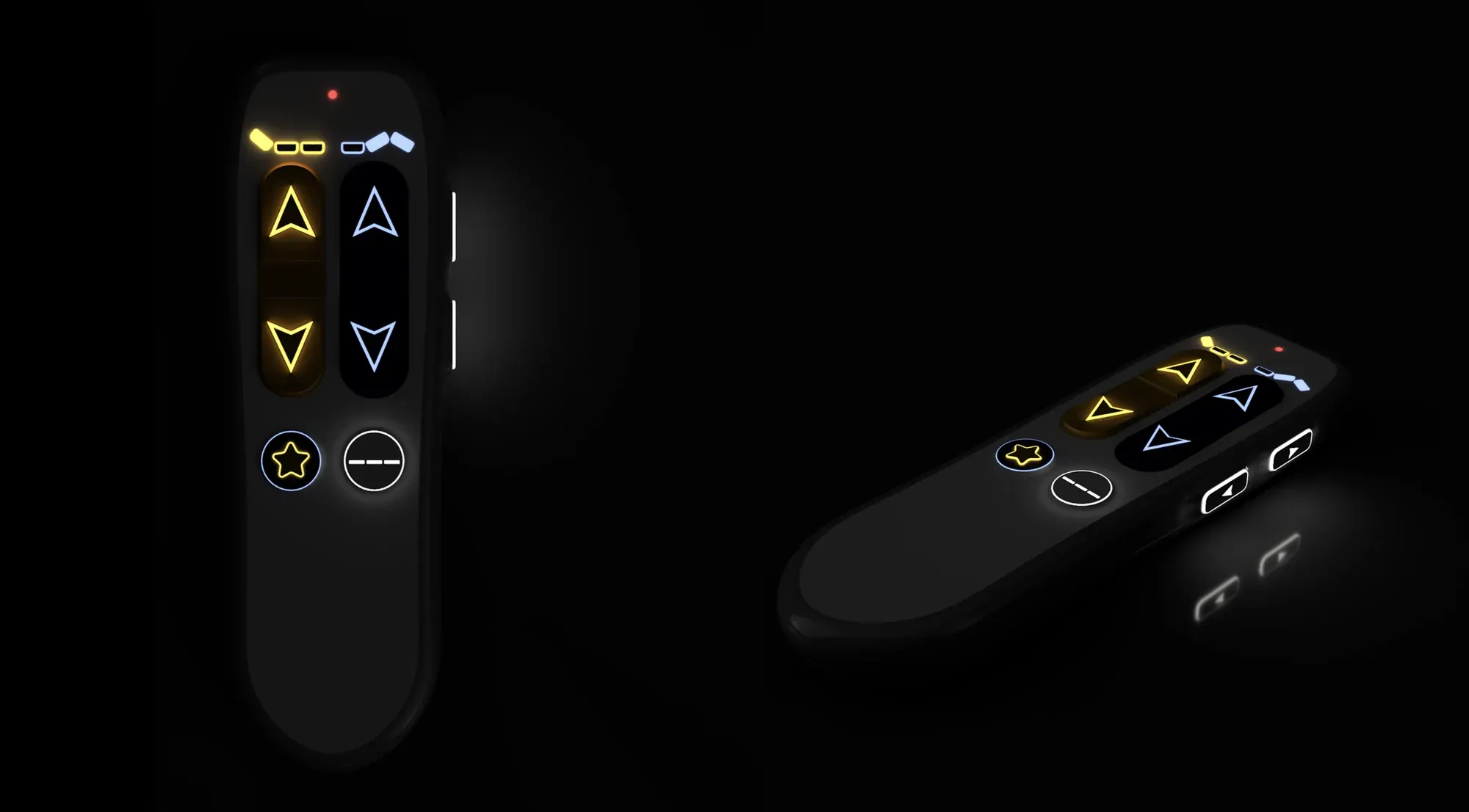
I consolidated everything we learned — layout, functions, shape — into a detailed 3D model: large, high-contrast rocker buttons; a narrow, grippable waist; and only the functions citizens actually need.
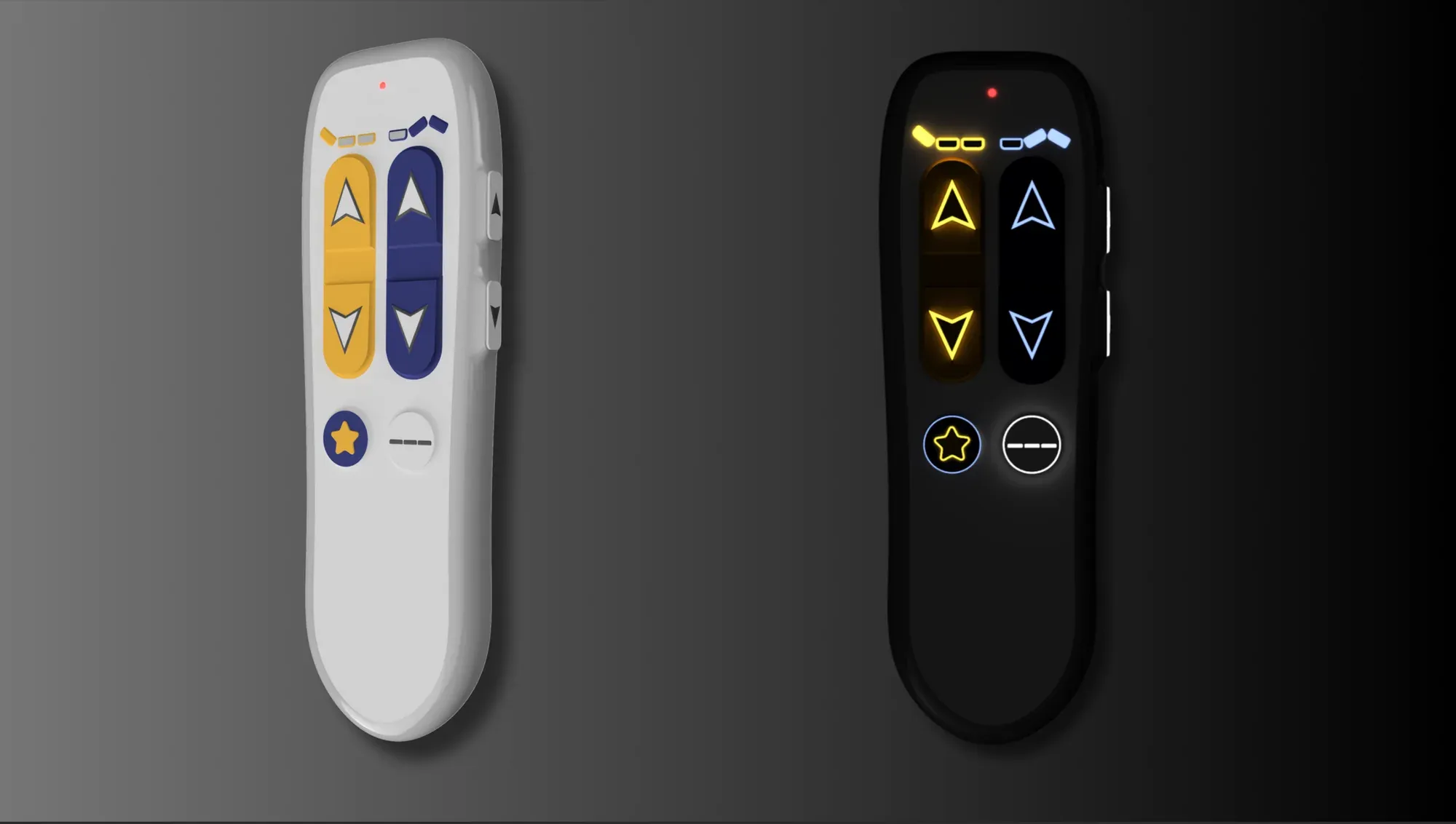
Modelling resolved button travel, wall thickness, and the waist profile.
Printing the model made the design real: we could hand it to people, watch their grip, and collect far more concrete feedback than any render allows.
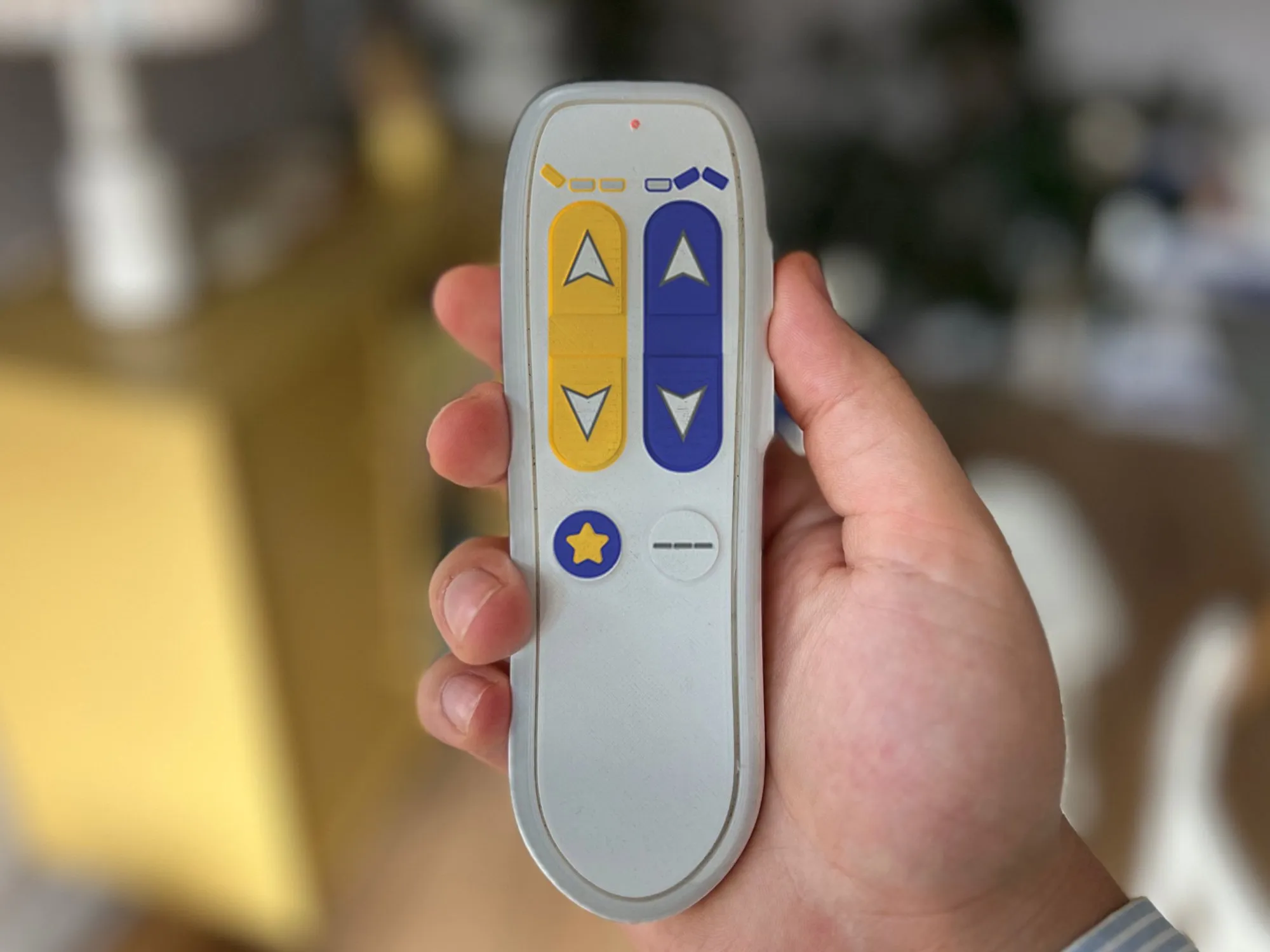
The printed model, sized for smaller hands and findable in the dark.
Outcome & reflection
A remote concept that senior citizens can find, hold, and operate on their own — supporting LINAK’s goal of preparing elderly care for a future with fewer hands, and giving citizens more agency over their own comfort.
What the project taught me: accessibility constraints sharpen design rather than limit it. Designing for the hardest case — gloved hands, closed eyes — produced a remote that is simply better for everyone. And nothing accelerates honest feedback like a physical object someone can pick up and judge with their own hands.