
Work / Focus Lamp
Smart Temperature Probe
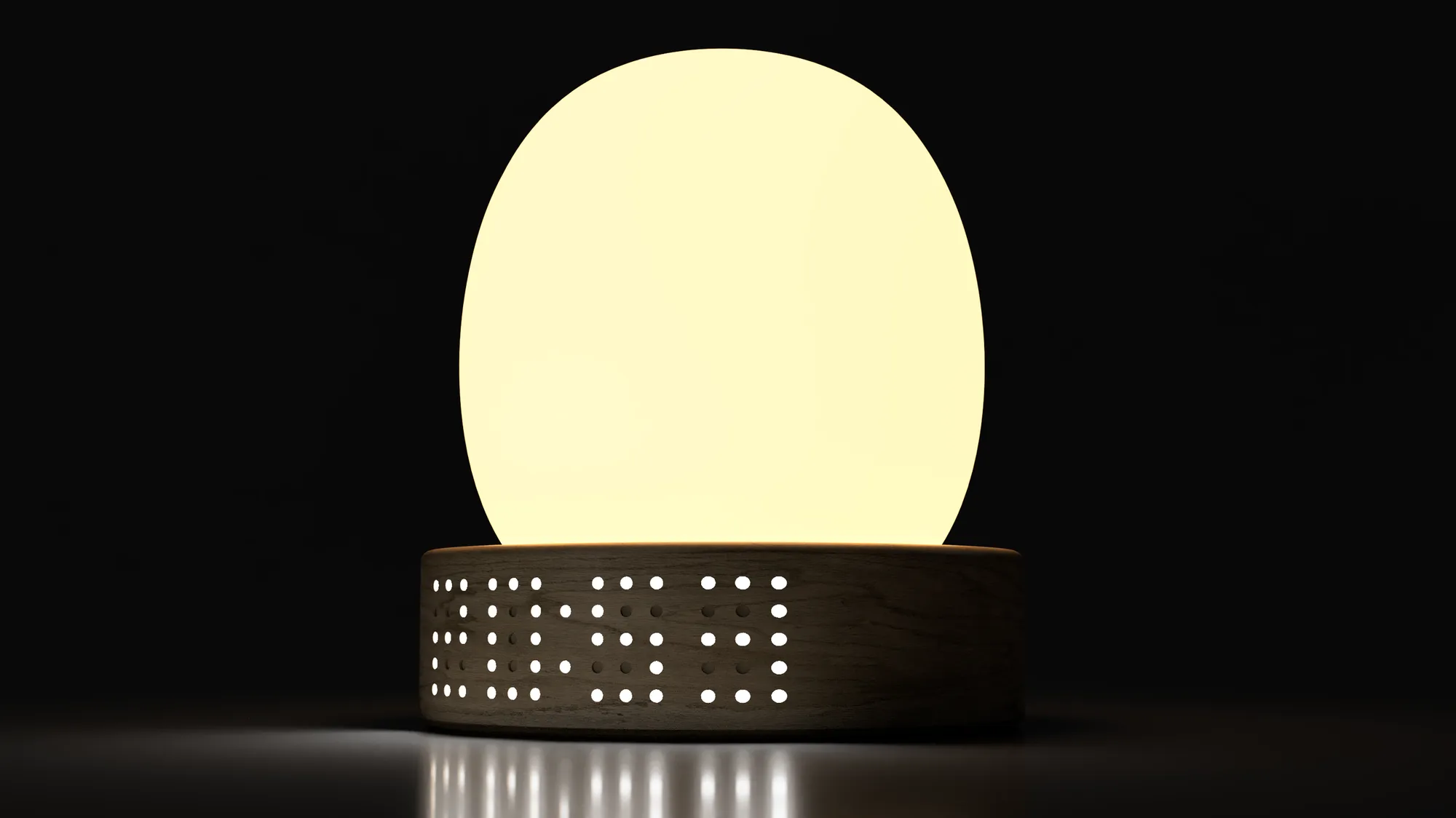
A desk lamp that keeps you in flow: set a session length with a twist, and the light gradually dims as your time runs out — no phone required.
Problem
Staying focused while learning a new skill is hard when the only clock you have is the phone that breaks your focus. Alarms interrupt — but nothing shows time remaining at a glance.
Approach
Three weeks of autoethnographic research learning pottery, with session-by-session field notes; concept sketches; a laser-cut cardboard prototype tested in my own study sessions; CAD to pin down the form.
Outcome
A desk lamp that makes time ambient: twist to set a session length, and the light slowly dims as time runs out. Work in progress — a functional prototype is the next milestone.
Challenge
the clock lives inside the distraction
How do you stay focused while learning a new skill? To find out first-hand, I spent three weeks learning clay pottery at home — ending every session with meticulous notes on what helped and what broke my focus. The patterns were clear:
- Planning sessions in advance (when, and for how long) made it easier to start and to stop
- My phone was the single biggest distraction
- Keeping track of time without the phone was nearly impossible
- Alarms helped — but gave no sense of time remaining at a glance
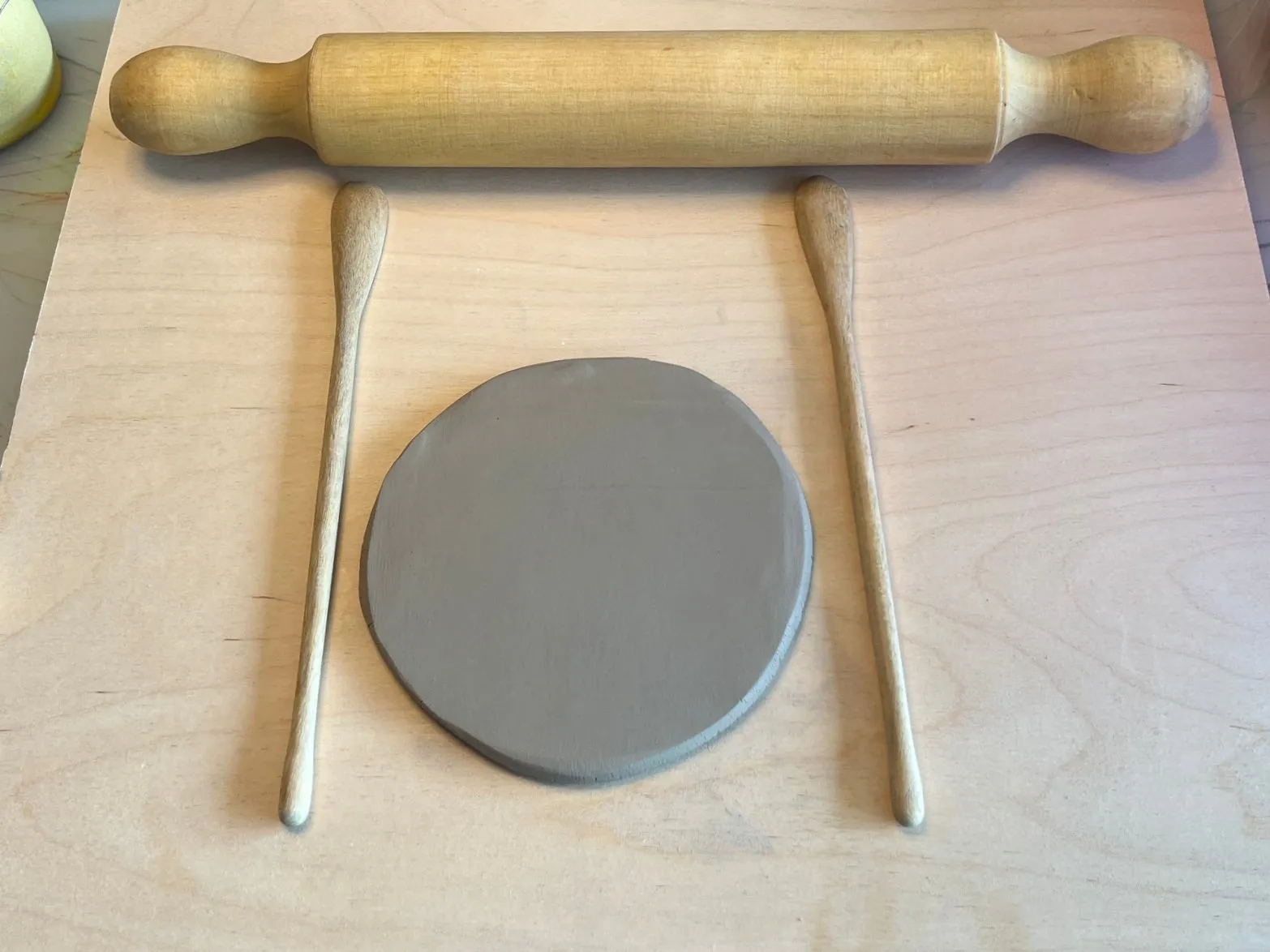
Three weeks of pottery, logged session by session — the research method was living the problem.
Sketching
ambient time
The insight: I needed time to be ambient — visible without being demanding — and a reason to put the phone in another room.
Inspired by a small battery lamp that switches off after a set time, I sketched a desk lamp with a built-in timer: twist to set the session length, press to start. As time passes, the light gradually dims; when it turns off, the session is over. You always know roughly where you are — without ever checking a clock.
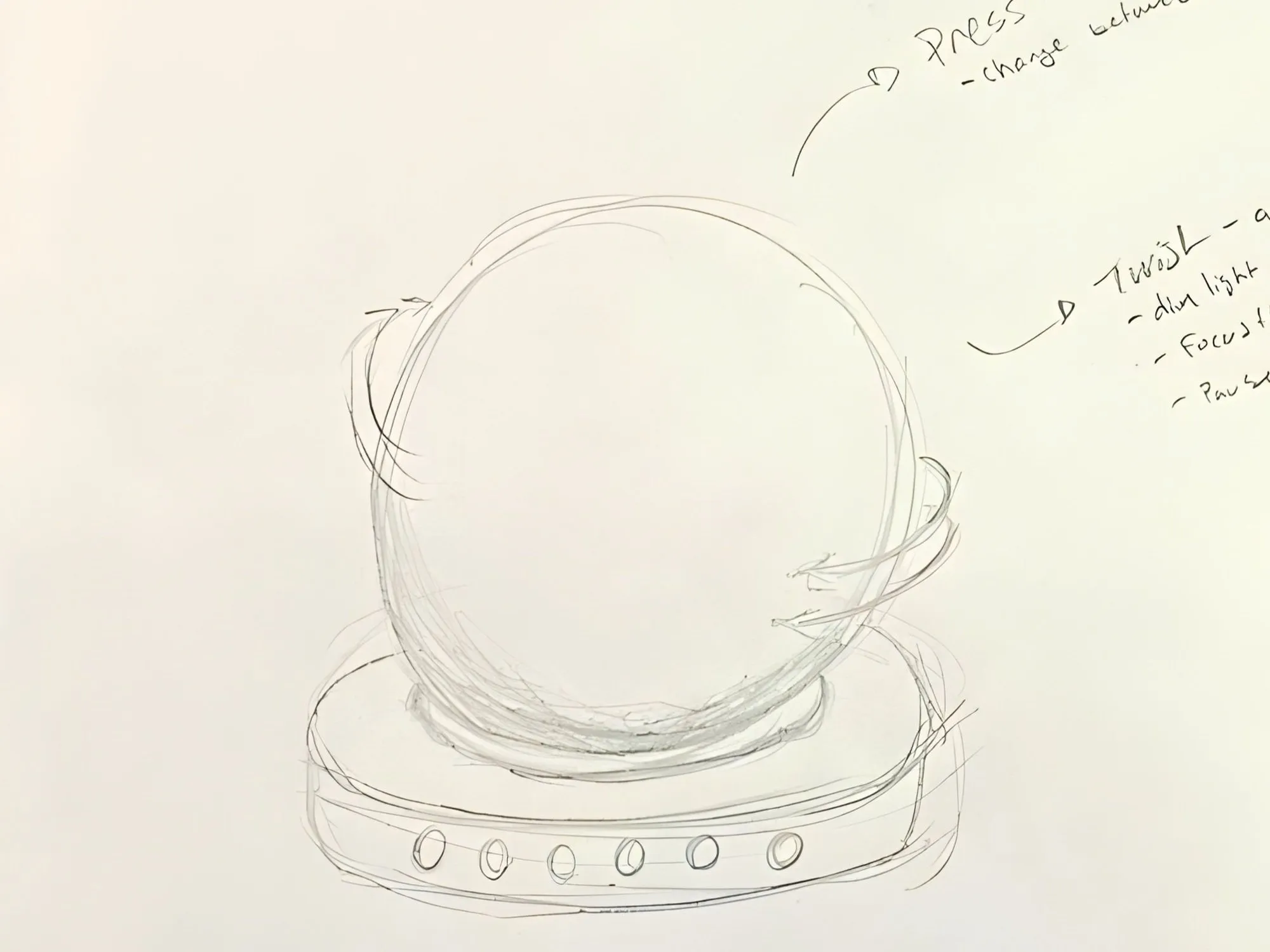
Sketches translating the field notes into a twist-and-press timer lamp.
Prototyping
cardboard slices, fast iteration
I built a working mock-up around the battery lamp that inspired the idea, stacking laser-cut cardboard layers like 3D-print slices — much faster to iterate than actual printing. The base’s inner diameter matches the donor lamp, so the electronics simply nest inside.
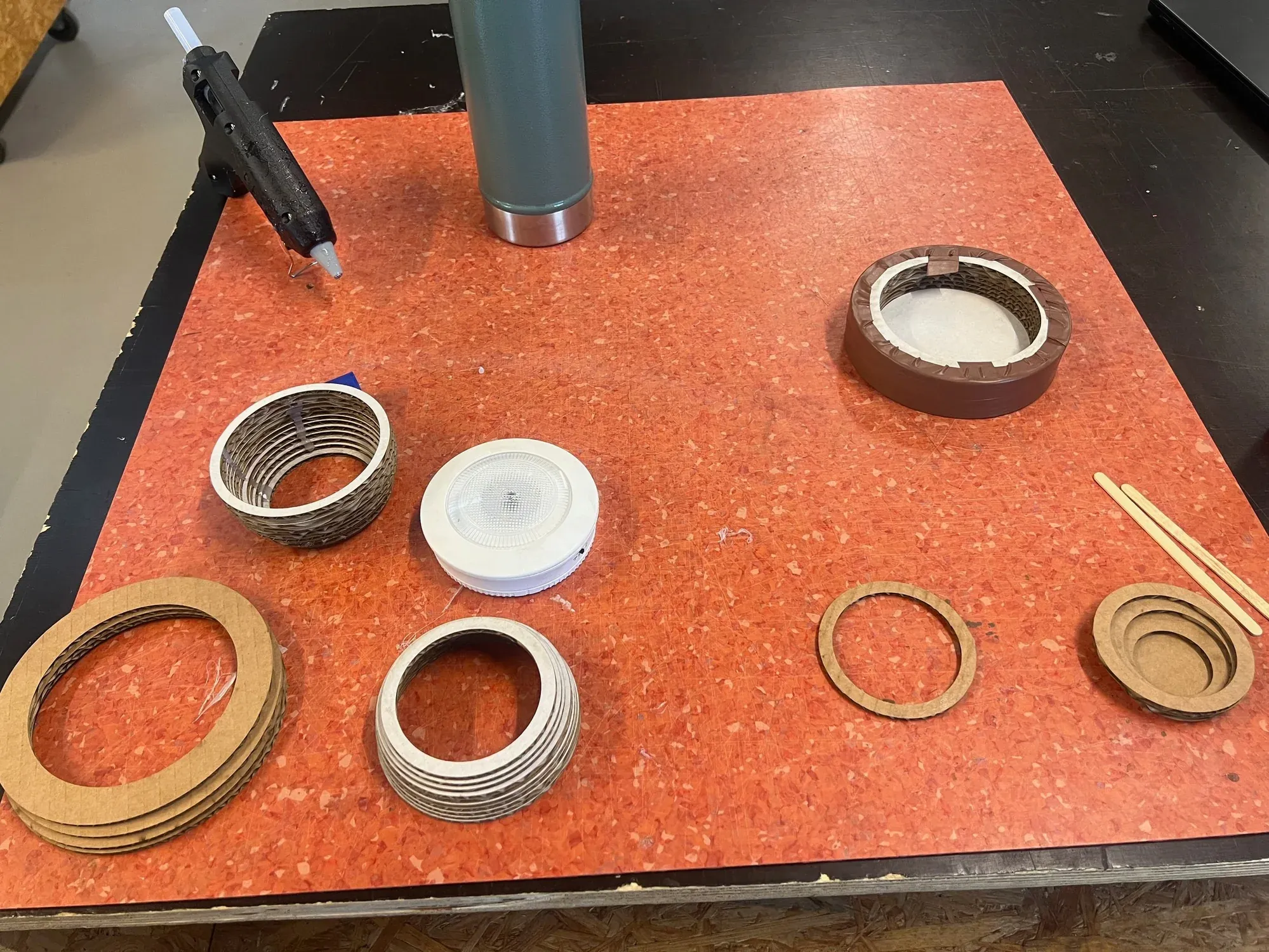
Laser-cut layers stack like print slices — a full shape iteration takes minutes, not hours.
Testing
at the desk it was designed for
I used the prototype through my own study sessions to evaluate the twist-and-press controls and the overall shape and size on a real desk.
Watch the prototype in action ↗
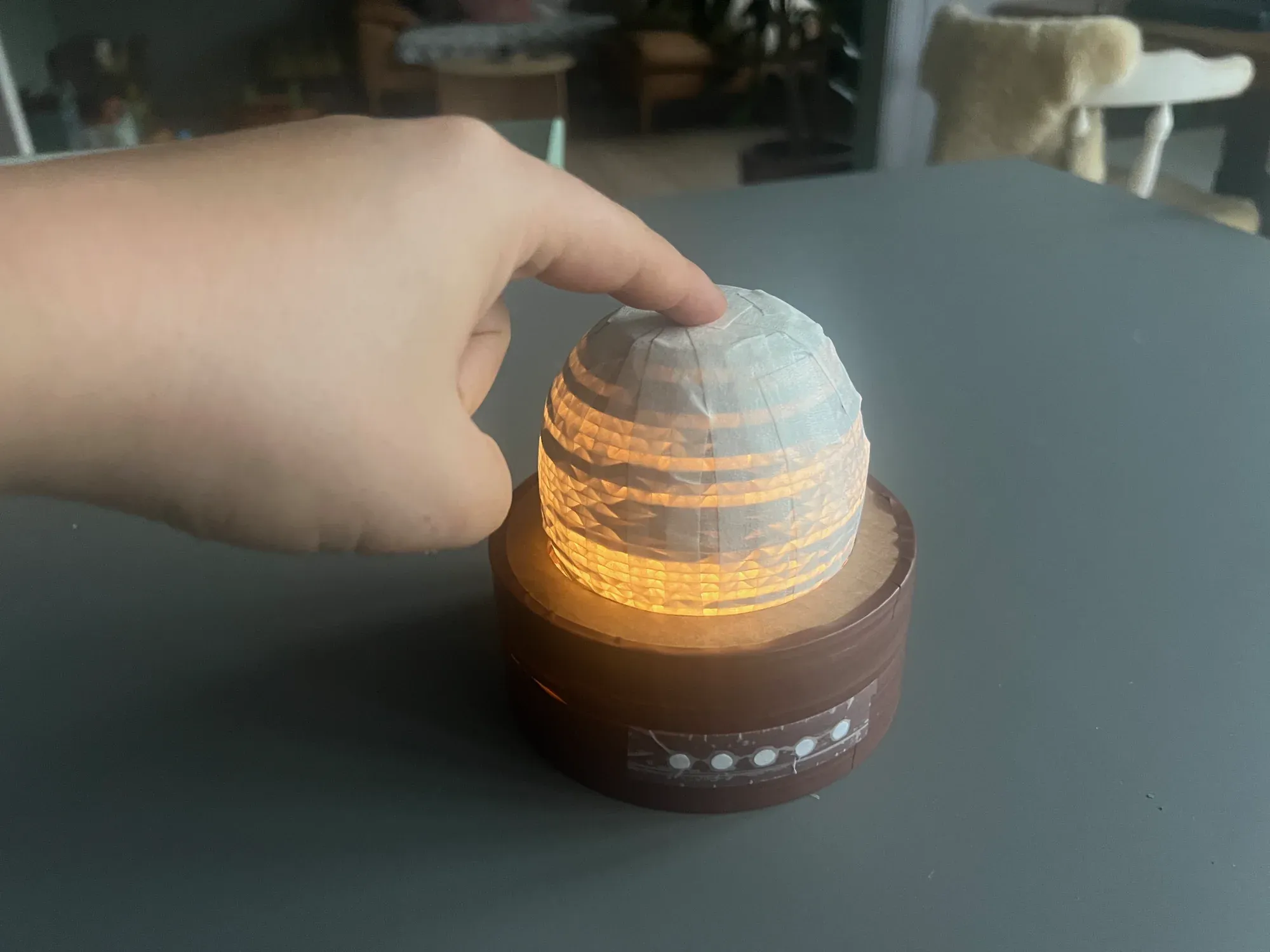
The prototype in use during a real study session.
CAD model
pinning down the form
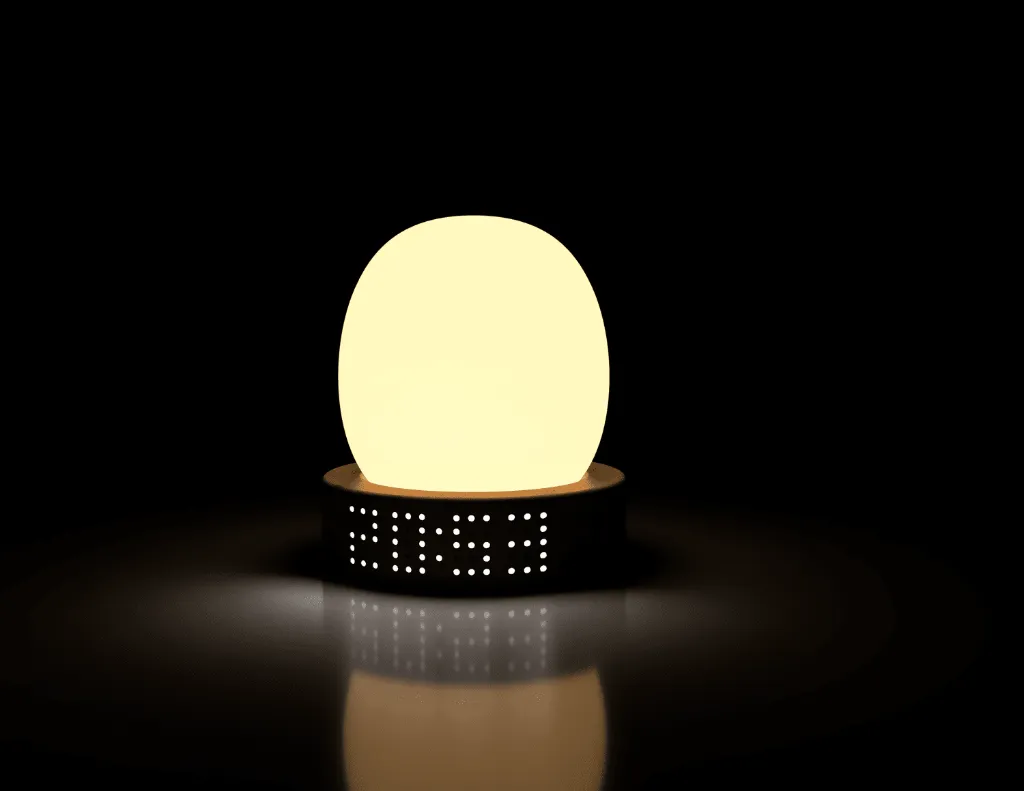
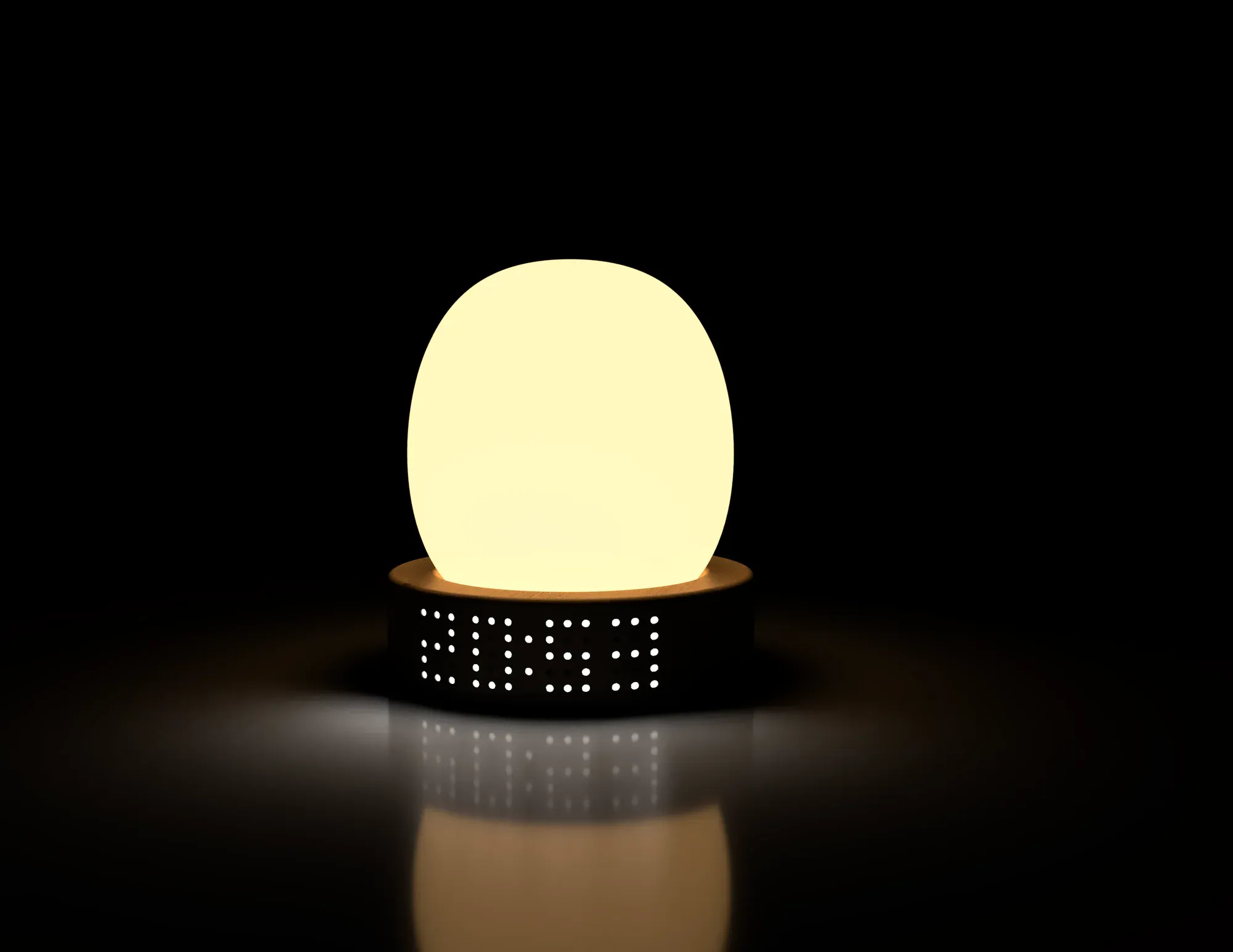
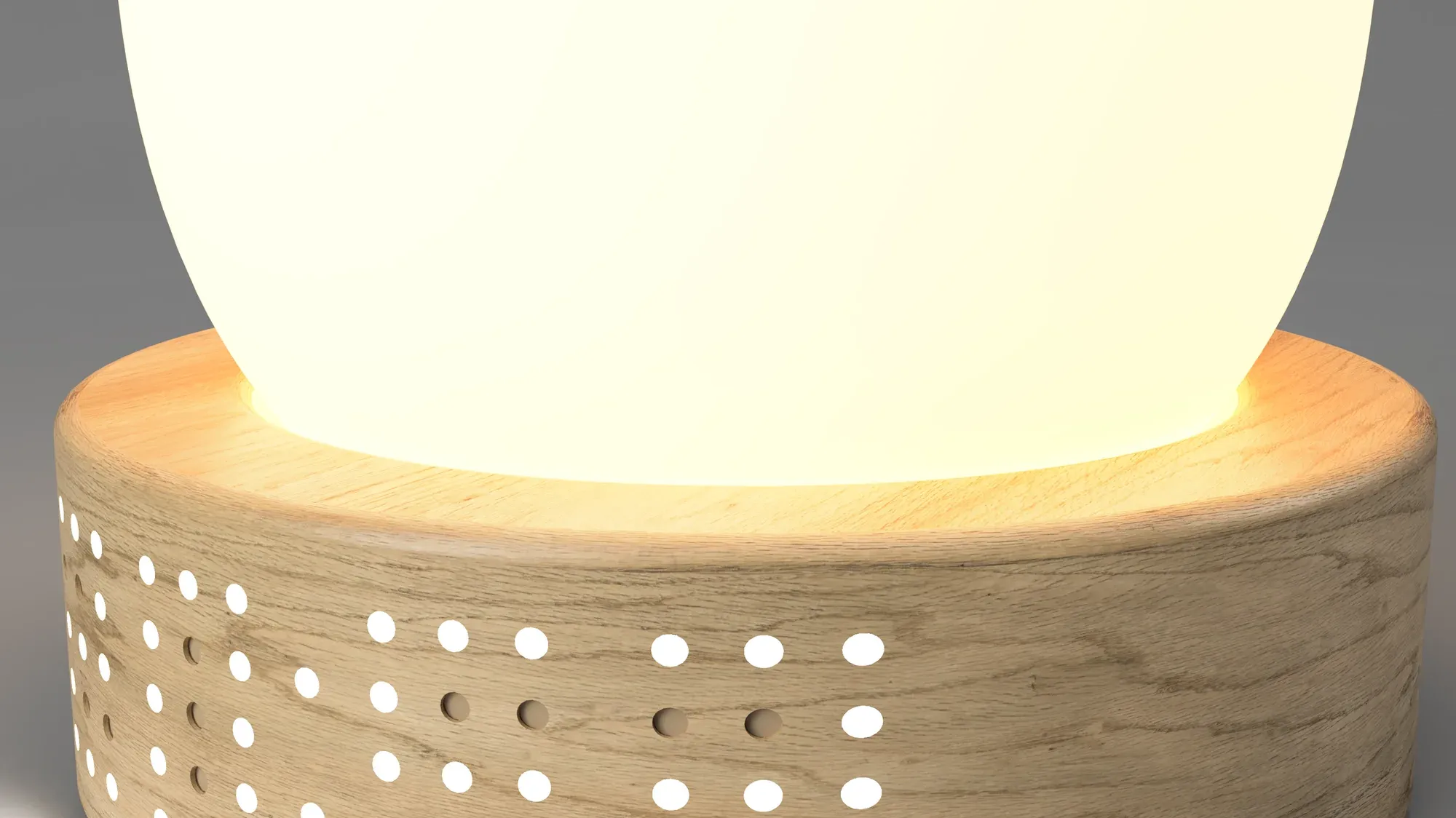
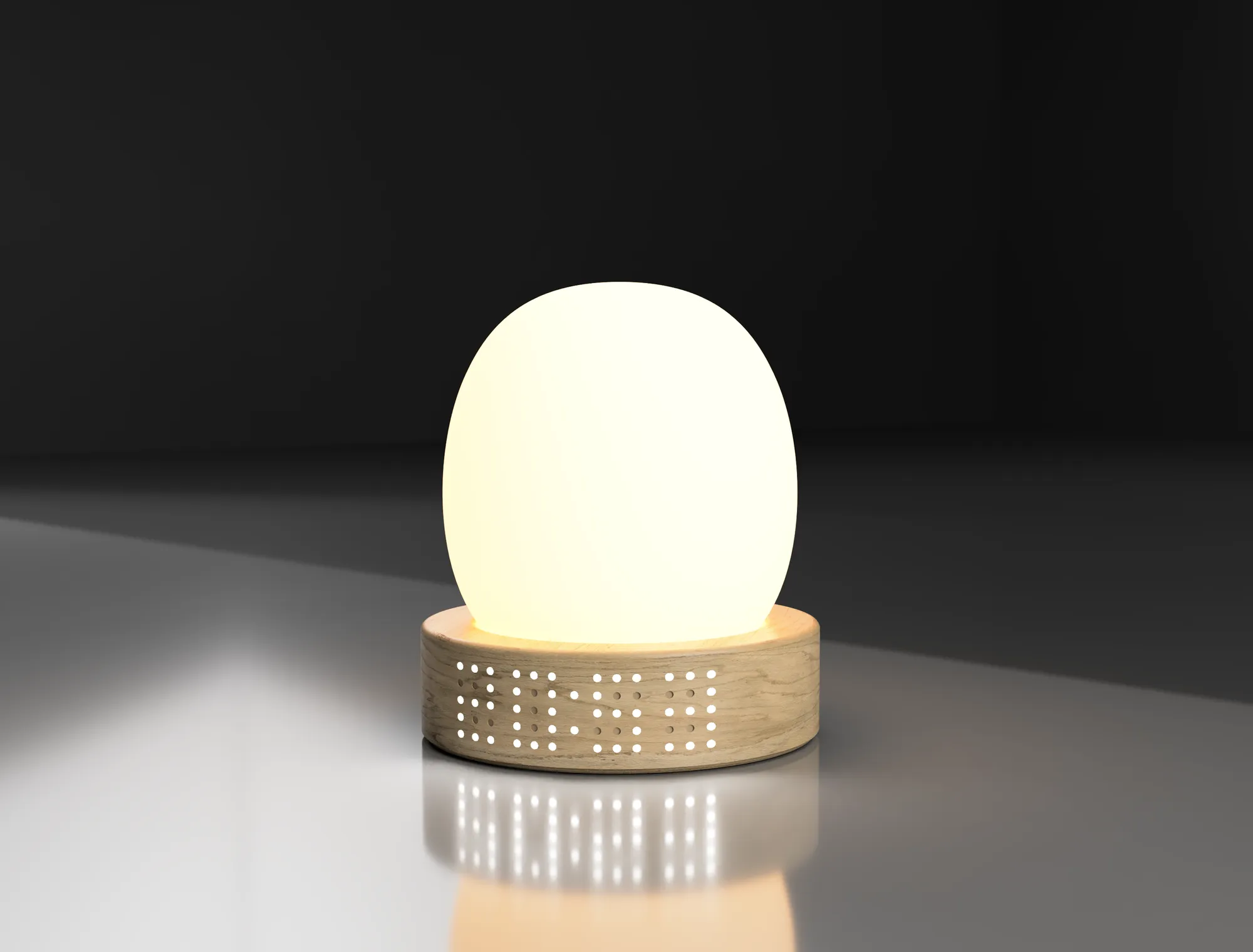
To resolve proportions and materials, I modelled the lamp in CAD — partly for a better representation of the idea, and partly because I couldn’t help myself.
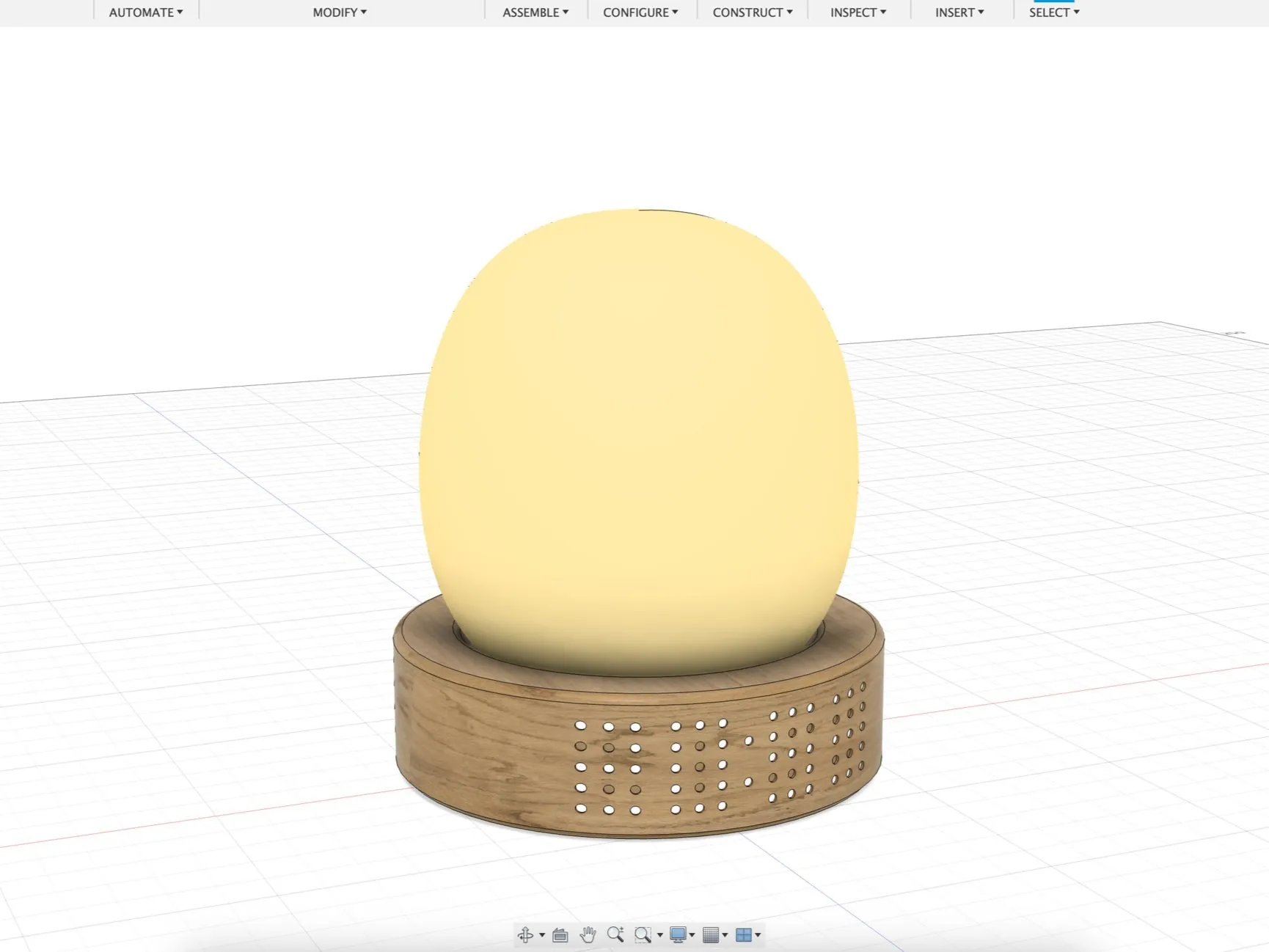
The CAD model resolved proportions, materials, and the twist mechanism’s feel.
Status & reflection
This is a work in progress. The next milestone is a functional prototype — light, timer, and controls working together — to test with other learners and iterate from real feedback.
What the project has taught me so far: being your own research subject is a fast route to honest insights — and a risky one. Autoethnography surfaced needs I would never have found in an interview, but the next iteration has to earn its keep with learners who aren’t me.
Where the concept is heading: warm, quiet, and dimming toward done.